
Alta Verapaz Travel Guide – Visit Semuc Champey, Cobán, Laguna Lachuá, Hun Nal Ye, and more!
Why should you trust me and take my advice?
I moved to Guatemala to be with my husband, and I’ve been lucky to call this country my new home. We spend most of our free time traveling all over Guatemala, and we have traveled multiple times to the most popular tourist destinations in Guatemala. We’ve been to the department of Alta Verapaz three times, and my advice and travel tips are based on extensive experience.
If you have a long list of questions or if you need help creating a customized Guatemala itinerary, please click here to book a travel consultation with me. For an introduction to traveling to Guatemala, click here for my Ultimate Guatemala Travel Guide.
What Is Alta Verapaz and Why Should You Visit?
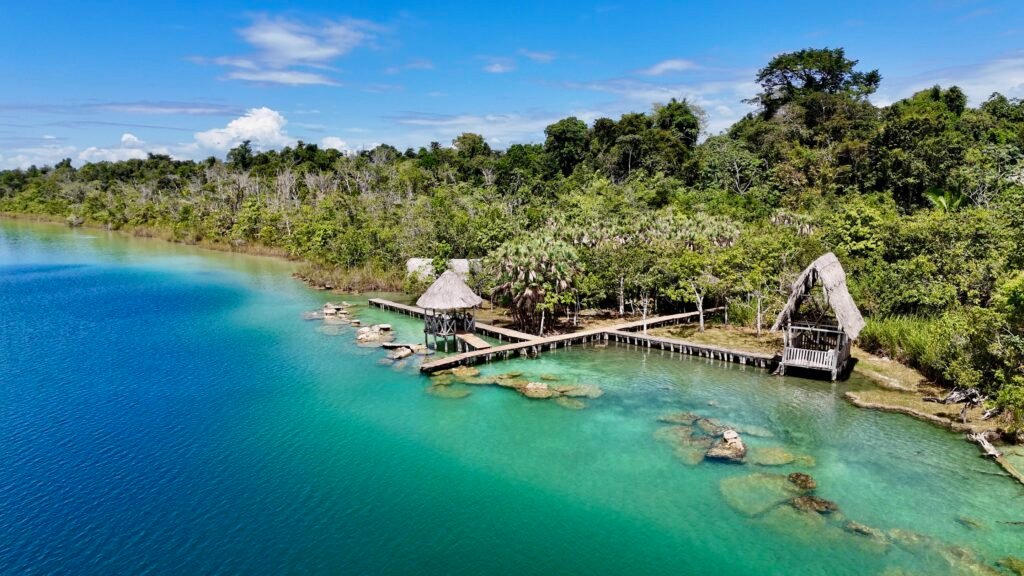
Alta Verapaz is a department in the central highlands of Guatemala, north of Guatemala City and west of the Río Dulce corridor. The departmental capital is Cobán, a mid-sized highland city that serves as the gateway and logistical hub for the entire region. The department is characterized by lush cloud forests, misty mountain valleys, ancient limestone cave systems, turquoise rivers and lakes, and a rich Q’eqchi’ Maya cultural heritage that remains vibrant and living rather than preserved in a museum.
What sets Alta Verapaz apart from the rest of Guatemala’s tourism landscape is a combination of natural diversity and genuine remoteness. This is not a department that has been polished for tourism the way Antigua or Panajachel has. The roads will challenge you. The distances require planning. Some of the best destinations require a combination of transportation modes — car, 4×4 truck, boat, and on foot — to reach.
The department also has a unique historical character shaped by the German coffee plantation owners who settled here in the 19th century — a legacy visible in the region’s architecture, its extraordinary coffee culture, and the German surnames still found among some local families. Combined with the Q’eqchi’ Maya traditions, the Spanish colonial layer, and the extraordinary biodiversity of the landscape, Alta Verapaz is culturally and naturally one of the most layered destinations in all of Guatemala.
Places to Visit in Alta Verapaz
Semuc Champey
Semuc Champey is the most popular place to visit in Alta Verapaz. If you only go to one destination in this department, let it be Semuc Champey — though once you’ve been, you’ll understand why people extend their plans to see everything else.
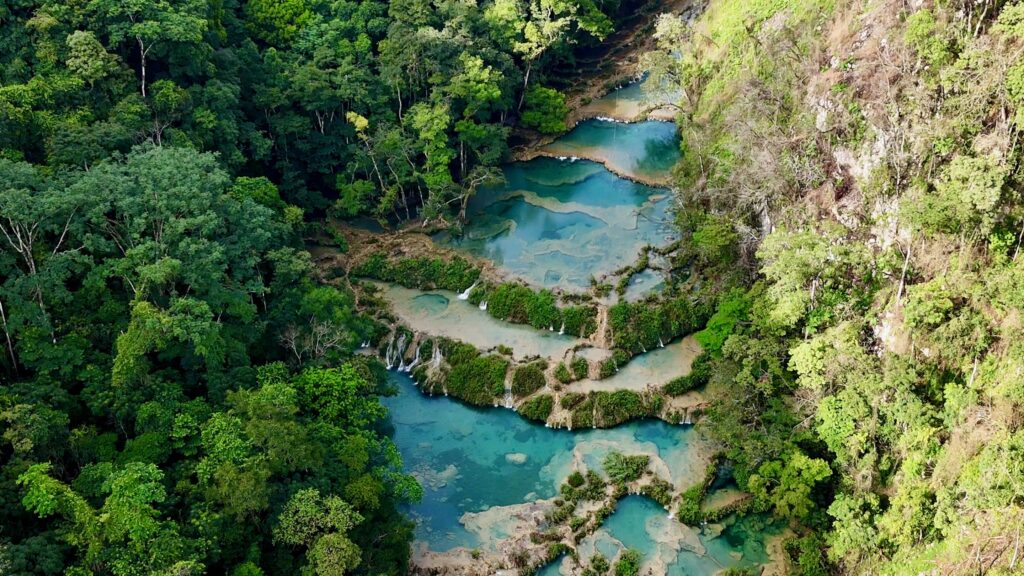
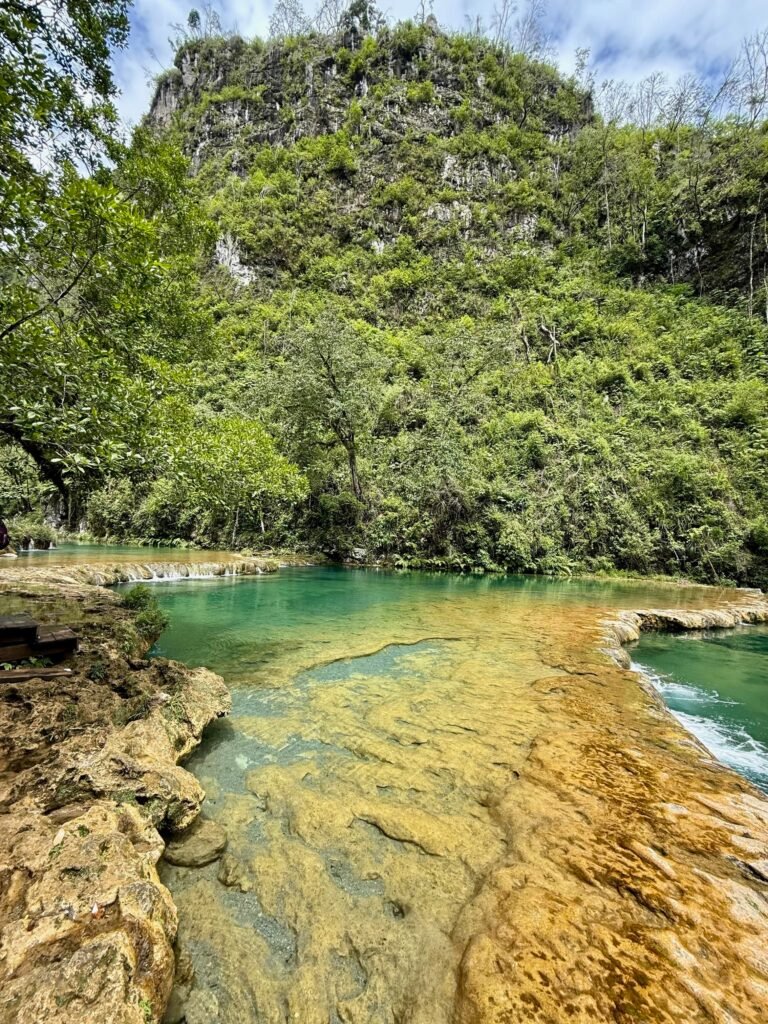
Semuc Champey is a natural limestone bridge stretching approximately 300 meters over the Cahabón River. The name comes from Q’eqchi’ Maya and means “where the river hides under the earth” — and that’s exactly what happens here. Most of the Cahabón River thunders into an underground tunnel beneath the bridge, while a small portion flows gently across the top, creating a series of stepped, cascading pools in the most extraordinary shades of turquoise and jade. The effect is almost impossible to believe when you first see it.
The nearest town is Lanquín (officially San Agustín Lanquín), a small Q’eqchi’ Maya community that serves as the base for most visitors. The tourist shuttles arrive in Lanquín, and this is where most of the hotels are located. As of 2025, the road from Lanquín to Semuc Champey is paved — a significant improvement from the notoriously brutal bumpy ride it used to be. Now it takes approximately 25 minutes to drive to Semuc Champey from Lanquín.
What to do:
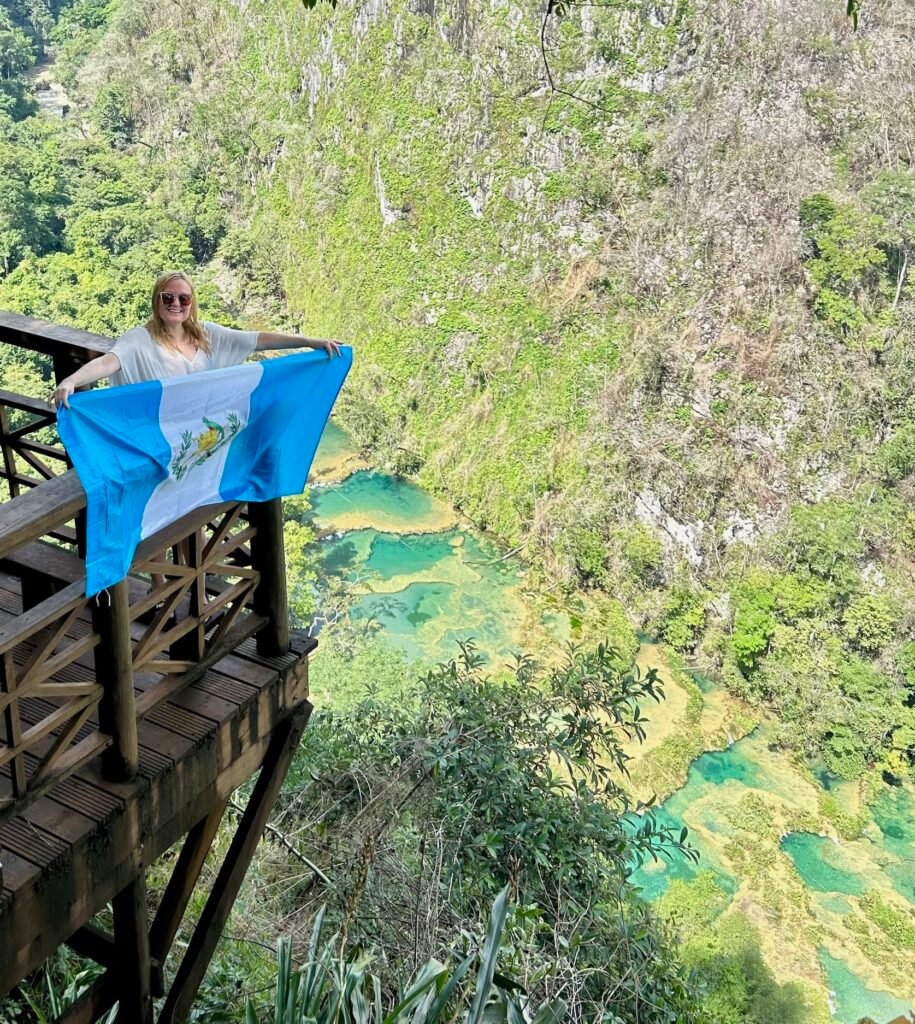
The mirador (viewpoint) is the iconic experience — a steep 30-minute jungle hike that rewards you with a bird’s-eye panorama of the entire pool system snaking through the rainforest. I recommend doing this first before you go swimming. You will get sweaty walking up the stairs, and it’s very refreshing to swim after the experience! Also, the viewpoint can get busy at the top, so it’s better to avoid the crowds by going up early and as soon as you arrive at the park.
The path up to the viewpoint is easy to find, as once you enter the park, you’ll walk for approximately 15 minutes, then notice a sign and the stairs going up to the left. Since the stairs are a mix of wood and rocks, I recommend bringing very comfortable shoes to wear that will help keep you sturdy on slippery rocks. I have waterproof hiking sandals that I recommend buying because you can swim in them. Click here to check out the sandals I have.
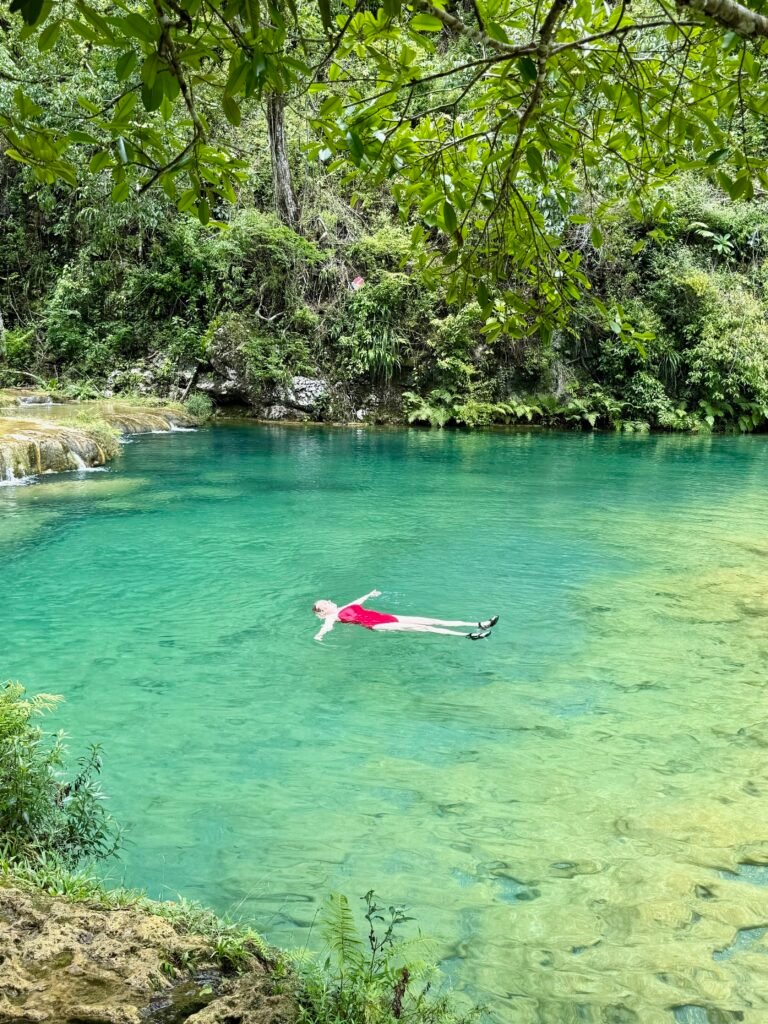
The pools themselves are the main draw. You can wade, swim, and float between pools connected by small waterfalls. The pool in the center of the park is always the busiest (the pool near the lockers), but I have found that the first two pools are just as beautiful and not as busy. If you want to rent a locker near the main pool, you’ll need to bring cash to pay the small fee.
The pools can have sharp rocks at the bottom. Therefore, I recommend wearing waterproof hiking shoes and swimming in them (as I’ve mentioned above). Also, you’ll need to walk from one pool to the next, and once again, it’s a combination of walking on wood (steps and platforms) as well as slippery rocks. It takes approximately 5-10 minutes to walk from pool to pool, so it’s not difficult. There are only a few steps, so if you have mobility issues, then I would focus on exploring the pools at Semuc Champey and skipping the viewpoint.
Something to note is that there are fish in the pools. If you are relaxing in the water and not swimming, then you should be aware that the fish have a small bite. The fish don’t cause a lot of pain because they are only nipping, but it can be annoying.
The caves are another attraction, as most guided tours of Semuc Champey will take you inside the caves. They are called K’an Ba Caves or Kanba Caves, and are located just outside of the entrance to Semuc Champey. Most tours will bring you to the caves first, but if you want to avoid doing what everyone else does, then you can visit the caves in the afternoon (just ask your guide).
The caves tour is an adventurous experience and less of a sightseeing tour. You’ll wade through water ranging from ankle-deep to chest-deep and swim through a few short sections. You will hold a candle as a primary light source. This tour is not recommended if you can’t swim very well, are claustrophobic, or have problems with darkness. If you book a tour to Semuc Champey that includes this, then you can skip it.
Tours:
Shared Tour to Semuc Champey and Kanba Caves from Lanquín: I took this tour with my friends, and it was great! It leaves from Hotel Guayaha (which is where I recommend staying), and it includes a fantastic lunch!
Full-Day Tour to Semuc Champey from Guatemala City: If you don’t have time to stay nearby, then it is possible to visit Semuc on a day trip. It is a very long day, but since you’re not driving, it’s possible to get there and back as well as explore all in the same day.
3-Day Tour of Cobán and Semuc Champey from Antigua: This is a great tour to book if you already have plans to visit Antigua. You only need 3 extra days to visit Semuc Champey!
Semuc Champey + Kanba Caves from Cobán: This is a day tour from the city of Cobán, which is the main city of the department of Alta Verapaz (you’ll find more information below about Cobán).
Semuc Champey 2-day tour from Flores: If you’re staying in Flores (to visit Tikal) then you can easily book a quick trip to Semuc Champey as well.
3-Day Tour of Semuc Champey and Cobán from Guatemala City: This is not just the traditional tour to Semuc Champey. You’ll also visit El Biotopo Del Quetzal where you can see Guatemala’s national bird, the Quetzal. You’ll also visit the Rey Marcos Caves (you’ll find more information below about these caves).
Hotels:
Please keep in mind that if you stay in Lanquín, you’ll be approximately 25 minutes from Semuc Champey. You can book the tour I have listed above to arrive at Semuc Champey or inquire with your hotel. I have one hotel listed below which is walking distance to Semuc Champey. Most people stay in the town of Lanquín because this is where the tourist shuttles drop off, there are more hotel options, and electricity. The hotels near Semuc Champey will use solar power or a generator.
Guayaha: This is the best hotel in the Semuc Champey area. It’s located in Lanquín; they offer budget-friendly rooms but also more luxury-style rooms, and they have a full restaurant, food, zipline, and more. This is the perfect place to stay with kids as it’s not a party hotel or a backpacker hostel (which is what most of the accommodation is in this part of Guatemala). This is the only hotel with air conditioning (in my opinion, it’s necessary for this part of Guatemala).
Yaxlik River Lodge: This is a budget-friendly hotel located in Lanquín and right along the Lanquín River. They offer small, private, and family rooms.
Ch’i Bocól Community Hostel: This is a budget-friendly hostel located in Lanquín and in a very beautiful setting. They offer dorms and private rooms.
Hotel Las Marias de Semuc Champey: If you want to stay just next to Semuc Champey, then I recommend this budget-friendly hotel. The hotel is comfortable and within walking distance to the park.
Mountain Nest: This is the most unique accommodation in Lanquín as it’s a cabin located in the mountains and with an incredible view.
Transportation:
It takes approximately 6-7 hours to arrive from Guatemala City, 7-8 hours from Antigua, 8.5 to 9.5 hours from Panajachel, and 8.5 hours from Flores. There are several transportation options to arrive in the town of Lanquín. The quickest way to arrive is by hiring a private driver or taking a shared tourist shuttle.
For a private driver, I recommend contacting GuateDriver. They drove me and my friends to Semuc Champey from Guatemala City, and it was a great experience! I’ve hired them a few times (whenever my husband doesn’t drive me), and every driver I’ve had speaks English. The owner told me that only some of their drivers speak English, but it is possible to put in a request for an English-speaking driver.
The price to hire a private driver depends on the destination, group size, and dates. You’ll need to contact GuateDriver directly for a quote. Their email is info@guatedriver.com, and their WhatsApp number is +502-3775-7831. GuateDriver can bring you anywhere in Guatemala and not just to the typical tourist destinations.
To book a tourist shuttle, I recommend using the GuateGo platform. This website will show you all the different routes, times, and prices to come and go from Lanquín. The shuttles arrive in Lanquín and not exactly at Semuc Champey. However, you can contact your hotel for additional transportation if you decide to stay at a hotel next to Semuc Champey.
The tourist shuttles transport a group of people at a specific time from one destination to the next. These shuttles can be used throughout Guatemala to visit all the main tourist destinations. Something to note is that the drivers sometimes go fast through winding roads, so I recommend bringing something such as Less Drowsy Dramamine if you suffer from motion sickness.
Other attractions in Lanquín:
Semuc Champey is the main attraction; however, there are a few other things to do in the area. Lanquín National Park offers tubing on the Lanquín River, and you can visit caves. The National Park is located across from Hotel Guayaha, and you can book an experience on-site by paying a small fee in cash.
Cobán
Cobán is the capital of the department of Alta Verapaz, and it’s one of Guatemala’s greenest and coolest cities.
The city sits at around 1,320 meters in elevation in the cloud forest, which means the climate is cool and often misty. Cobán has a fascinatingly layered history: it was originally a Q’eqchi’ Maya settlement, then colonized by Spain, and later developed a significant German immigrant community in the 19th century. Today, Cobán is the cardamom capital of the world, the center of Q’eqchi’ Maya culture, and home to some excellent coffee — all things worth slowing down to appreciate before heading into the jungle.
Many tourists stay in the city of Cobán as a base in order to explore other places in the department of Alta Verapaz on day trips. This is quite convenient, and below I have a list of day trips from Cobán as well as activities in the city.
Day Trips From Cobán:
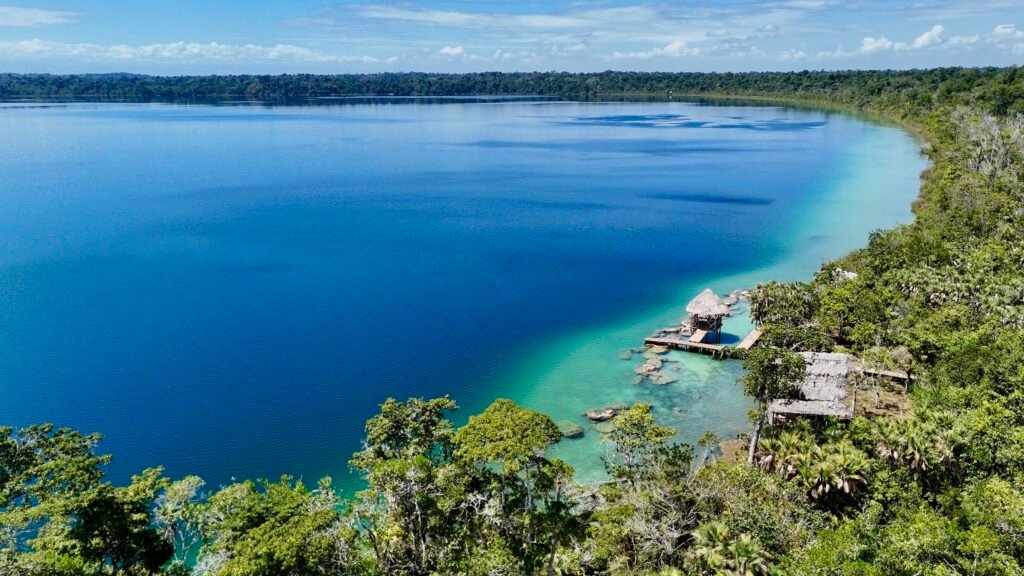
Visit Laguna Lachuá from Cobán: This all-inclusive tour is a long day but completely worth it! It takes 3.5 hours to drive to Laguna Lachuá and 3.5 hours to drive back. You’ll have 5 hours to explore the lake, and it includes a packed lunch. This is one of the most remote places in Guatemala, and if you visit during the week, you’ll hardly see anyone there or you’ll likely have the lake to yourselves!
The lake is turquoise and blue and is literally one of the most beautiful places in Guatemala. I highly recommend booking this tour, which will take you completely off the beaten path in Guatemala.
Visit the Caves of Bombil Pek from Cobán: This is another off-the-beaten-path destination in Guatemala. It’s approximately 2 hours north of Cobán. You’ll have a few hours to explore the caves, and if you visit during the week, you’ll likely have the caves to yourself.
Visit Semuc Champey + Kanba Caves from Cobán: Semuc Champey is the most popular destination in Alta Verapaz. It’s very easy to visit as a day trip from Cobán, as it takes approximately 2 hours to drive here from the city.
Visit Rey Marcos Caves from Cobán: This is one of my favorite places to visit in Alta Verapaz, and it’s not too crowded on the weekends. It takes approximately 30 minutes to get here from Cobán.
Things to do in Cobán:
Parque Central La Paz is the heart of the city — a classic Guatemalan central park surrounded by colonial architecture, perfect for an evening stroll. The cathedral anchors one side; the market stalls ring the other.
Finca Santa Margarita is the coffee experience in Cobán. This working coffee plantation offers guided tours through the full process — planting, picking, roasting, and exporting — and finishes with a tasting. Notably, the farm is largely run and operated by women, from the coffee pickers to the administrators of the on-site school and health clinic. It’s a good few hours well spent.
Museo El Príncipe Maya is a small private museum housing a rich collection of pre-Columbian Mayan art, jewelry, and pottery — primarily from El Petén, Alta Verapaz, and Quiché. Compact but impressive, and worth an hour if you’re interested in the region’s ancient history.
Parque Nacional Las Victorias is an 82-hectare forested national park right in the middle of the city — an unusual thing to have. It has ponds, BBQ and picnic areas, a children’s playground, a lookout point, and several kilometers of trails. This is a great place for a morning walk.
Capilla El Calvario sits atop a long flight of stairs at the north end of 7a Avenida and offers panoramic views over the city and surrounding mountains. Indigenous people leave offerings here, and it has a quiet spiritual atmosphere worth pausing for.
Where to eat in Cobán:
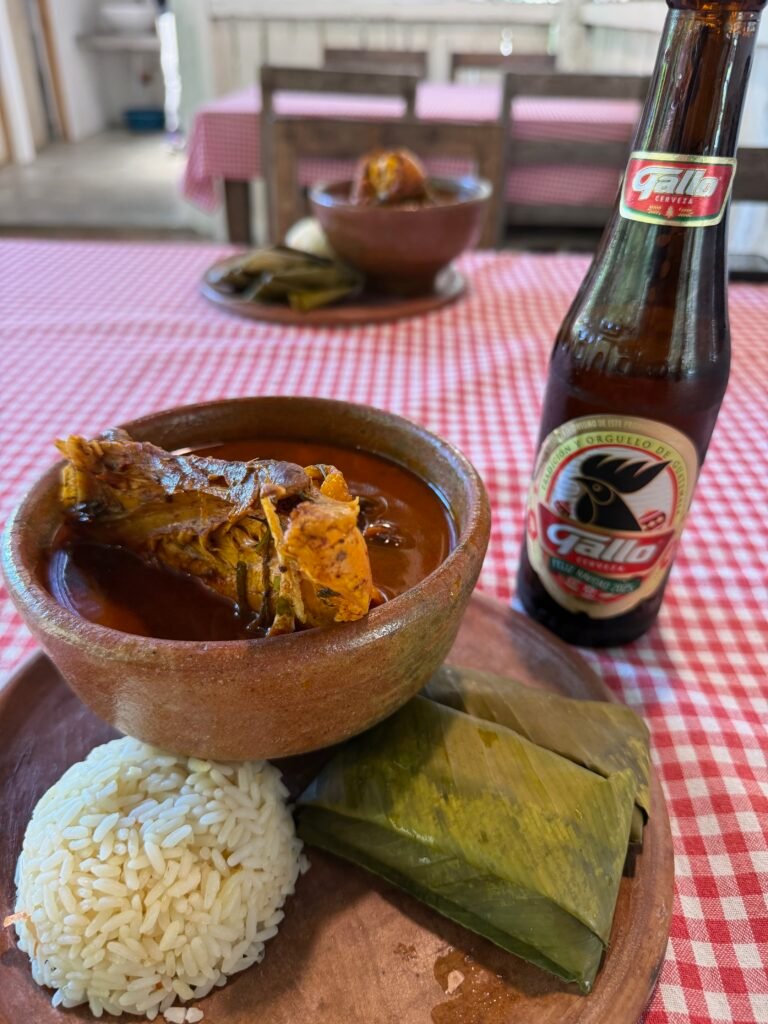
Cobán’s food scene reflects its layered heritage. The dish you absolutely must try is Kak’ik — a rich, deeply spiced turkey stew that is considered intangible cultural heritage and is as Q’eqchi’ as it gets. It’s served with tamalitos (small corn-dough tamales wrapped in banana leaves) and is warming and extraordinary. Find it at traditional restaurants around the market area.
El Peñascal: In my opinion, this is the best restaurant for traditional food in Cobán! I recommend trying Kak’ik, the most famous traditional dish from this part of Guatemala.
Trattoria di Nicola: This is an Italian restaurant just outside the main area of Cobán but still in the city. The food is delicious!
Terraza Bistro Cobán: This restaurant serves international cuisine. They have great cocktails and are located near the city center.
Where to stay in Cobán:
The hotels in Cobán are very affordable compared to the most popular tourist destinations such as Antigua, Panajachel, and Flores. You can find below a list of my recommendations.
Matalbatz Hotel: This is a historical hotel located near the city center. I think it’s one of the best hotels to book in the area, and it includes breakfast.
Estancia del Monje: This is a hotel located in the mountains outside of the city. I highly recommend this if you want a more rural stay.
Hotel Casa Duranta: This is another historical hotel located near the city center. In my opinion, it’s one of the best.
Transportation:
It takes approximately 5 to 6 hours to arrive from Guatemala City, 6 to 7 hours from Antigua, 7.5 to 8.5 hours from Panajachel, and just over 7 hours from Flores. There are several transportation options to arrive in the town of Lanquín. The quickest is to book a private driver or to take a shared tourist shuttle.
For a private driver, I recommend contacting GuateDriver. They drove me and my friends to Semuc Champey from Guatemala City, and we stopped in Cobán. I’ve hired them a few times (whenever my husband doesn’t drive me), and every driver I’ve had speaks English. The owner told me that only some of their drivers speak English, but it is possible to put in a request for an English-speaking driver.
The price to hire a private driver depends on the destination, group size, and dates. You’ll need to contact GuateDriver directly for a quote. Their email is info@guatedriver.com, and their WhatsApp number is +502-3775-7831. GuateDriver can bring you anywhere in Guatemala and not just to the typical tourist destinations.
To book a tourist shuttle, I recommend using the GuateGo platform. This website will show you all the different routes, times, and prices to come and go from Cobán. The shuttles arrive in Lanquín and not at Semuc Champey. However, you can contact your hotel for additional transportation if you decide to stay next to Semuc Champey.
The tourist shuttles transport a group of people at a time from one destination to the next. These shuttles can be used throughout Guatemala to visit all the main tourist destinations. Something to note is that the drivers sometimes go fast through winding roads, so I recommend bringing something such as Less Drowsy Dramamine if you suffer from motion sickness.
Grutas del Rey Marcos
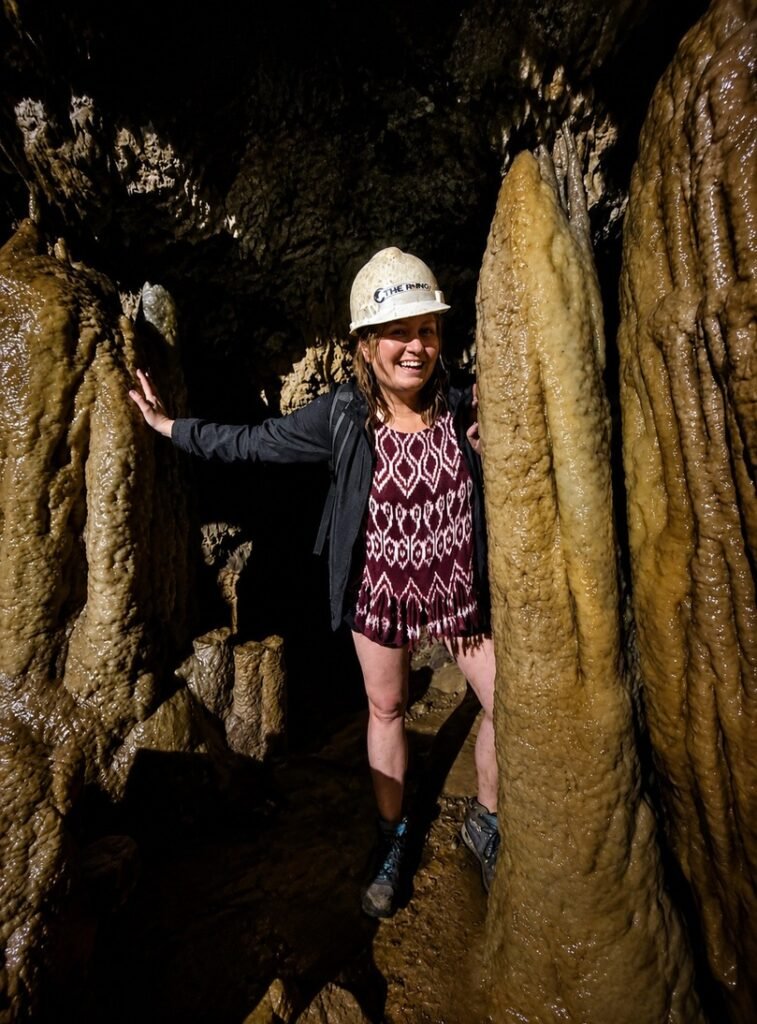
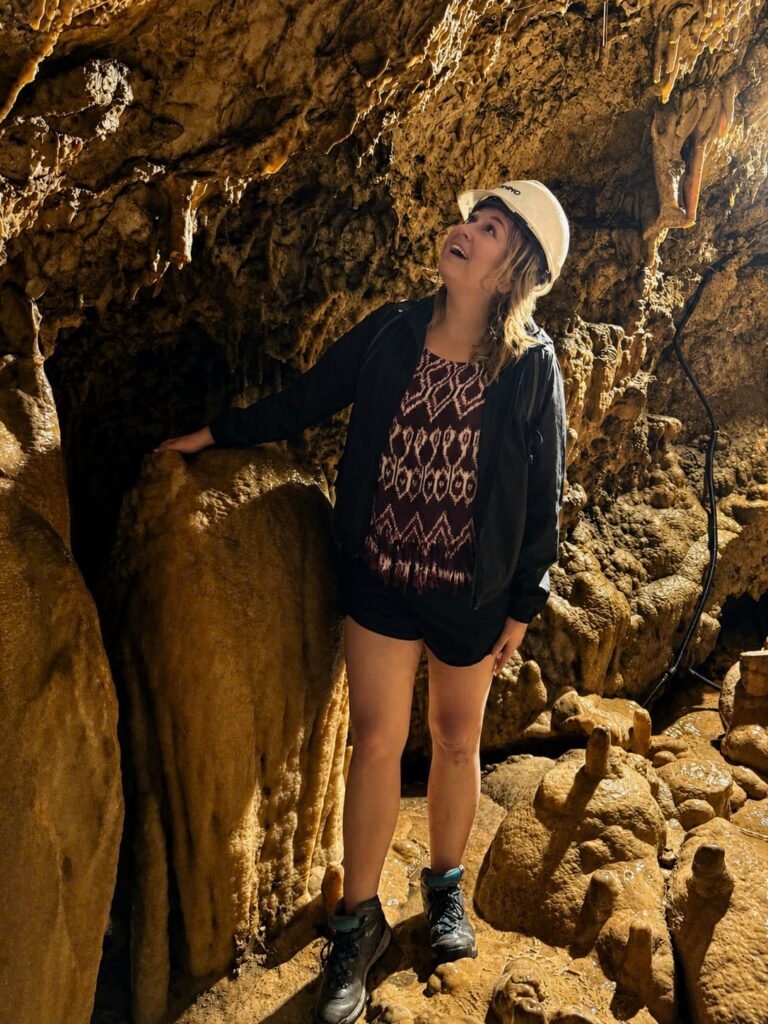
Approximately 30 minutes from Cobán, near the town of San Juan Chamelco, Grutas del Rey Marcos is one of Alta Verapaz’s most underrated destinations — a cave system with some of the most beautiful cave formations in all of Central America.
We came to this place one time, stayed overnight, ate at the restaurant, and enjoyed the activities. I think it’s the perfect destination to stay if you’re on your way to Semuc Champey or another place in Alta Verapaz. We already can’t wait to go back!
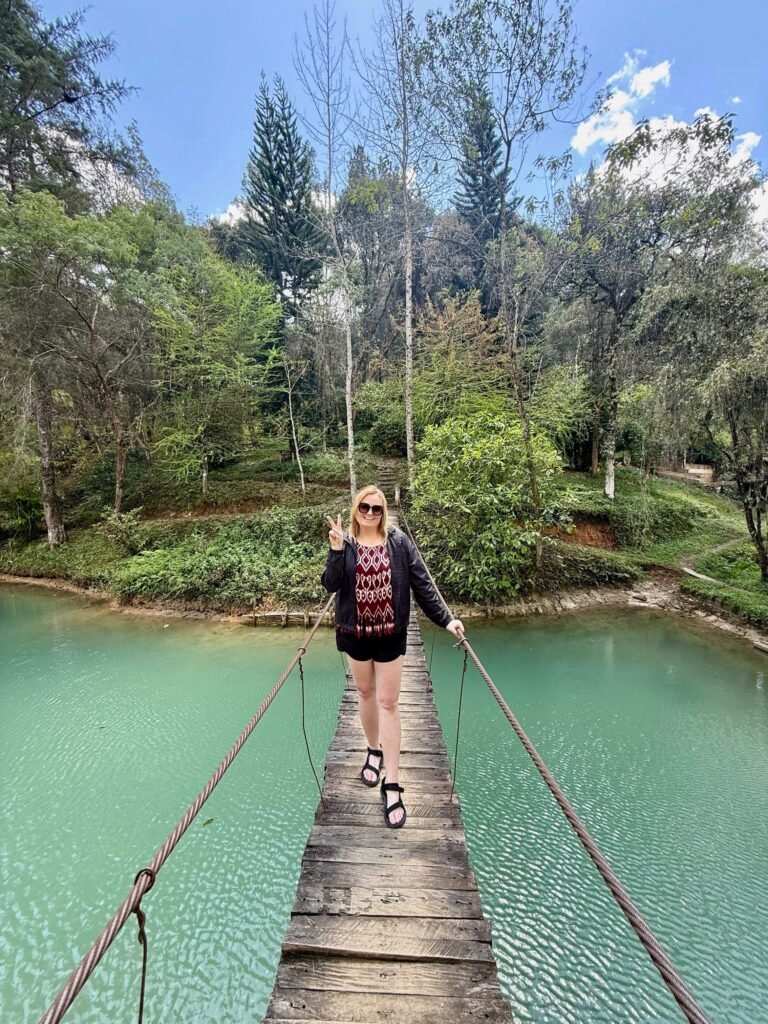
Grutas Del Rey Marcos has a hotel, restaurant, and activities to book. Since this is rural Guatemala with mostly local tourists, they are taking bookings through WhatsApp (this is very common for the remote and off-the-beaten-path destinations in Guatemala). They have tours to visit the caves, spa experiences, and cultural tours in the local town. I highly recommend contacting them on WhatsApp to find out about the current experiences they offer: +502-5308-9307.
The hotel rooms are basic but very comfortable and clean. We had a great experience. They also have a very nice spa with a hot tub and sauna. They offer massages, but I just thought this experience was only OK. We probably wouldn’t book the massage again, but we would like to repeat the sauna and hot tub.
If you visit, you’ll need to book a tour to explore the caves, as you can’t visit the caves on your own. They’ll give you a helmet, boots, and provide a safety briefing since the path to visit the caves can be quite small. If you’re claustrophobic, then it might be difficult to enjoy this experience, although I felt a bit anxious but ended up just fine! The caves are well lit and a guide will be with you the entire time. When we were there, a group tour showed up in a van and joined us. It took approximately 20 minutes to walk up an easy incline to get to the entrance to the caves.
If you’re planning to visit Grutas del Rey Marcos, then I recommend booking a day trip or staying in the hotel for one or two nights. There’s enough to do here to keep you busy for one day but no more than that.
I have below a list of a few of their prices for the hotel and activities (these are the prices they sent me via WhatsApp in February 2026):
- Adventure package #1: 150 Quetzales ($20 USD) per person, including the park entrance fee, entrance to the cave, equipment, ziplining, a short boat ride, and a grilled meat lunch.
- Adventure package #2: 100 Quetzales ($13 USD) for the park entrance, entrance to the cave, equipment, ziplining, and a short boat ride.
- Adventure package #3: 80 Quetzales ($10.50) for the park entrance, entrance to the cave, and equipment.
- Simple hotel room: 285 Quetzales ($37.50) for 1 person in a private room with a private bathroom and a queen bed.
- Double hotel room: 485 Quetzales ($64) for 2 people in a private room with a private bathroom and a queen bed.
- Triple hotel room: 725 Quetzales ($95) for 3 people in a private room with a private bathroom and a queen + imperial bed.
- Triple plus hotel room: 950 Quetzales ($125) for 3 people in a private room with a queen + 2 imperial beds.
- A large hotel room: 1,325 Quetzales ($174) for 5-6 people in a room with 2 queen beds and 2 imperial beds.
The hotel room bookings include 10% off the cost of the adventure packages as well as breakfast and TV with Netflix, YouTube, Disney Plus, etc.
I recommend contacting their customer service team on WhatsApp to confirm these prices and to book a hotel stay or package. Their phone number is +502-5161-0469. Grutas del Rey Marcos does not have traditional online booking, as you’ll need to transfer money to their bank to reserve a room. They might offer booking through credit card, but it will most likely be with an extra fee.
If you don’t have a local bank account in Guatemala, then I recommend using a service such as Remitly to transfer money between international banks. They offer great exchange rates, low fees, and quick transfers. I’ve used Remitly many times to send money to Guatemala. Click here to download the app.
Transportation and Tours:
Since it takes approximately 20 minutes to arrive from Cobán, I recommend booking this tour to visit Grutas del Rey Marcos. Otherwise, you can ask the staff via WhatsApp for transportation. If you’re coming from Guatemala City or Antigua, you can take a shuttle to Cobán or private transportation. Then the staff can arrange transportation from the city to their hotel.
If you want to take a road trip to Grutas del Rey Marcos and other places in Alta Verapaz (or additional places in Guatemala), then I recommend contacting GuateDriver. They have professional drivers who can take you anywhere in Guatemala and even across the border into Mexico, El Salvador, Honduras, or Belize. I’ve hired them a few times, and they offer competitive prices and great experiences. Their WhatsApp number is +502-3775-7831. If you contact them, they will give you a quote based on the number of people, dates, times, and destinations.
If you want to rent a vehicle, then I recommend selecting a 4X4 because many of the roads aren’t paved in this part of Guatemala. Click here to compare rental car rates in Guatemala.
It is not possible to take a tourist shuttle directly to Grutas del Rey Marcos.
Hun Nal Ye
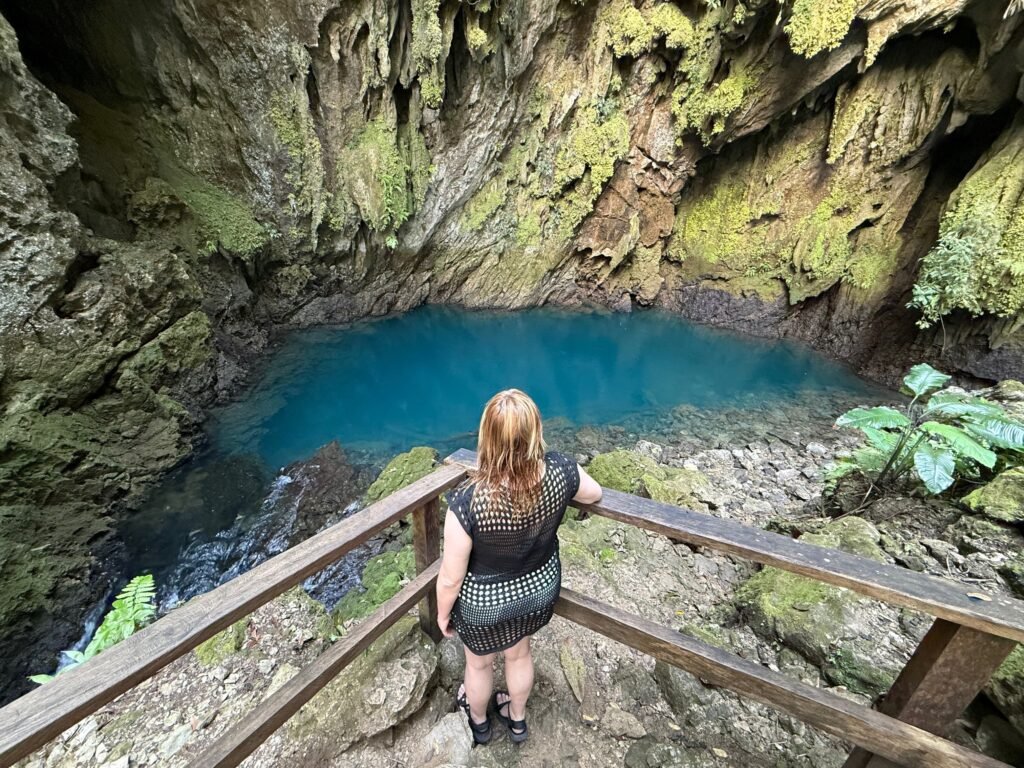
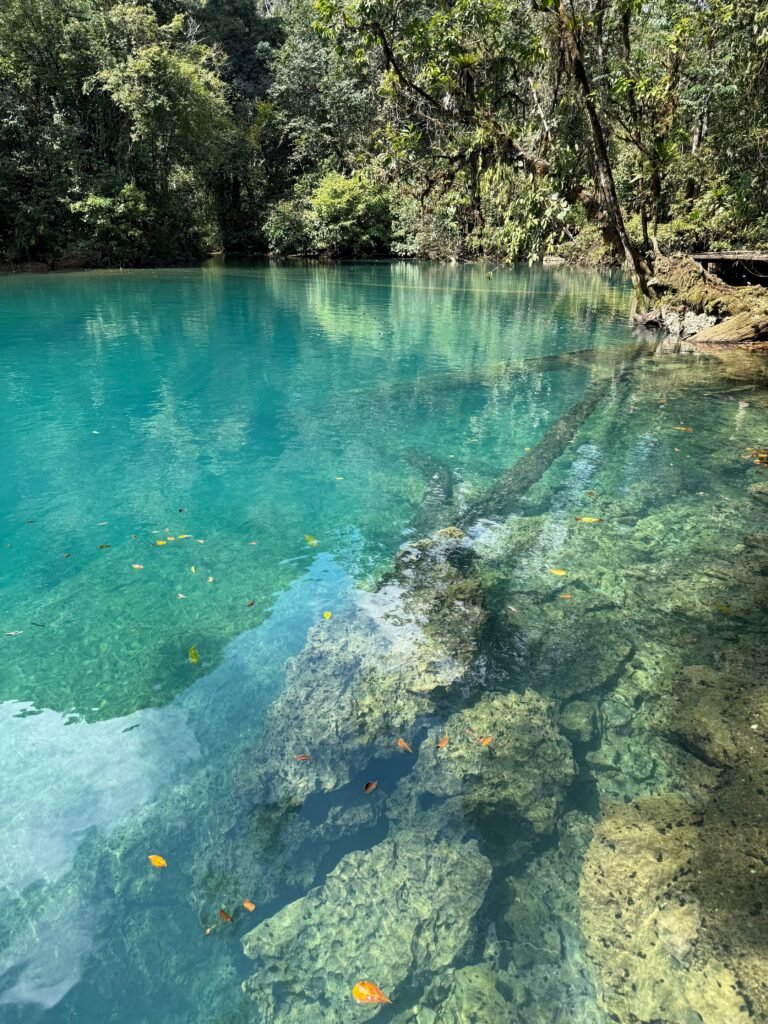
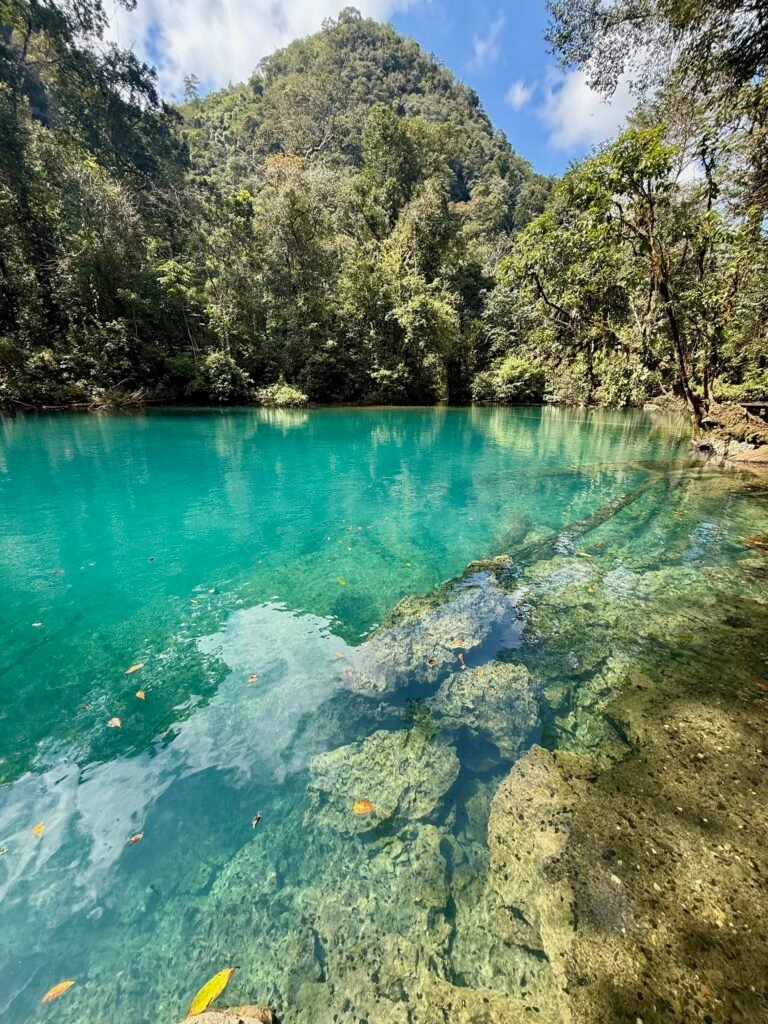
Approximately 1 hour and 40 minutes north of the city of Cobán, in the municipality of San Pedro Carchá, is one of Alta Verapaz’s most enchanting lesser-known eco-parks. Hun Nal Ye is located in a very remote area in the department of Alta Verapaz, and it’s one of Guatemala’s best-kept secrets. This place is known for its stunning, turquoise natural pools, a sacred cenote, and adventure activities. In my opinion, more tourists should add this incredible park to their Guatemala travel list!
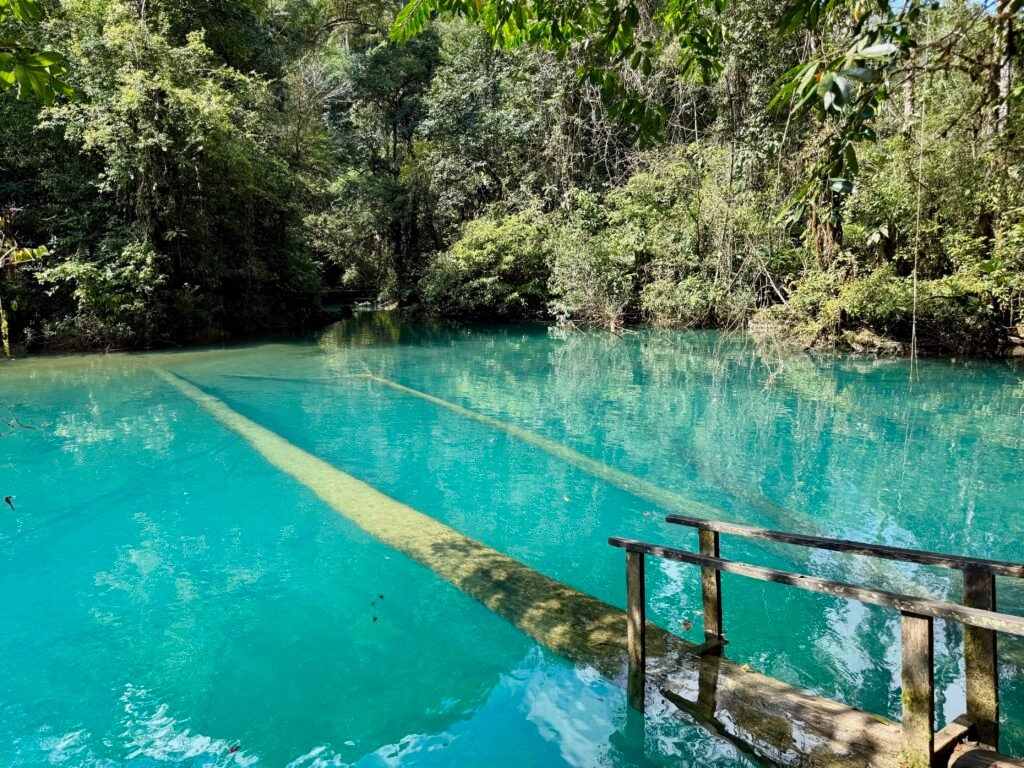
If you love aquatic adventures and nature, then you’ll want to visit this park to go swimming! Hun Nal Ye has a restaurant, a hotel, a campsite, a zipline, horseback riding, a waterslide, sports fishing experiences, tubing, and several swimming areas. The park also has an outdoor pool next to the restaurant, and all guests who are staying at the hotel or who pay for a day pass can access everything on-site (except that horseback riding and ziplining are an additional cost). Of course, the food and drinks at the restaurant are a separate cost as well.
We did all the activities with the exception of horseback riding. The zipline was great as it took us over the beautiful turquoise pools. There is an option to book a small hike (it was very quick and easy) to visit a waterfall and sacred cenote. It’s not possible to swim at the waterfall or cenote, but the hiking trip is only to view these places. The hike is included in the entrance fee (or hotel stay). We thought the tubing activity wasn’t that great but enjoyed swimming in the natural pools and going down the slide! The weather is warm and humid in this part of Guatemala but not as hot as the coastal areas. The temperature of the water is a bit chilly, but it feels perfect considering the weather!
We stayed at the hotel for 3 nights and explored the park for 2 days. I think this is the perfect itinerary! However, if you are short on time, then it is also possible to visit on a day trip and not stay at the hotel.
They have an eco-hotel with several rooms located near the parking lot and restaurant. The rooms do not have air conditioning, but they have a private bathroom, a fan, and one or two beds. We never felt hot inside the room, and it was very comfortable and clean. Each hotel booking includes breakfast, and since they only have a few rooms, I would contact them as early as possible to make sure they have availability.
The restaurant served delicious food for breakfast, lunch, and dinner. We were very happy with the food and drink selections, although they don’t cook and serve the caldos (traditional Guatemalan stews) unless 10 or more people order the caldo that day. Considering it is very quiet during the week, they don’t tend to serve the caldos unless it’s the weekend. The restaurant has wi-fi that worked well, but we didn’t have access to wi-fi in the hotel rooms or the rest of the park.
Something to note is that the best time to visit is during the dry season from November until the middle of May. We have been to Hun Nal Ye twice. One time during the wet season (September) and another time in February when the weather was perfect. In September, it can rain a lot, which makes the rivers and natural pools fill more than usual. Sometimes the water turns into a slimy green instead of turquoise, and it’s not as beautiful. The first time we visited, the water was green, but during our second trip, it was turquoise and perfect! Also, the roads leading to Hun Nal Ye are dirt and not paved (for approximately 45 minutes before arrival). Therefore, the roads can get muddy and can be difficult to drive on. This is why I recommend visiting during the dry season. However, sometimes it doesn’t rain too much during the wet season, and the visit is just fine.
Another piece of advice is to try to visit Hun Nal Ye during the week. The first time we visited was on a Sunday, and the park was very busy. In fact, the restaurant was full during lunchtime, and we had to wait for a table. It was very busy even during the rainy season, even though the water in the park was a slimy green color. The second time we visited was from Thursday until Sunday morning. It was quiet on Thursday when we arrived and on Friday as well. However, we noticed a few tour groups arrive on Saturday. We left early Sunday morning.
Hun Nal Ye is only open from Wednesday until Sunday and is closed on Monday and Tuesday. Therefore, I recommend planning accordingly if you’re taking a road trip through the department of Alta Verapaz. I have below a list of their prices (these are the prices they sent me via WhatsApp in February 2026):
- 100 Quetzales ($13 USD) entrance fee per person (3 years and older): includes hiking, tubing, swimming in the natural pools, sport fishing, and use of the hotel swimming pool.
- 150 Quetzales ($20 USD) for the camping package: includes everything listed in the entrance package plus one night of camping, but you’ll need to bring your own equipment.
- 450 Quetzales ($59 USD) for one person in a hotel room, 650 Quetzales ($85 USD) for 2 people in a hotel room, and 800 Quetzales ($105) for 3 people; it’s an extra 150 Quetzales for children from 3- 11 years old: includes the entrance package and a room with a private bathroom.
- The zipline experience is 100 Quetzales per person
- The horseback riding experience is 40 Quetzales per person
I recommend contacting their customer service team on WhatsApp to confirm these prices and to book a hotel stay. Their phone number is +502-3131-8313. Hun Nal Ye does not have traditional online booking, as you’ll need to transfer money to their bank in order to reserve a room. They might offer booking through credit card, but it will most likely be with an extra fee.
If you don’t have a local bank account in Guatemala, then I recommend using a service such as Remitly to transfer money in between international banks. They offer great exchange rates, low fees, and quick transfers. I’ve used Remitly many times to send money to Guatemala. Click here to download the app.
Transportation and Tours:
It takes approximately 1 hour and 40 minutes to arrive at Hun Nal Ye from Cobán and 3 hours from Lanquín (near Semuc Champey). It takes at least 6 hours to get here from Guatemala City and at least 7 hours from Antigua. If you’re coming from Guatemala City or Antigua, you can book this 3-day tour to visit Semuc Champey and Hun Nal Ye.
If you want to take a road trip to Hun Nal Ye and other places in Alta Verapaz (or additional places in Guatemala), then I recommend contacting GuateDriver. They have professional drivers who can take you anywhere in Guatemala and even across the border into Mexico, El Salvador, Honduras, or Belize. I’ve hired them a few times, and they offer competitive prices and great experiences. Their WhatsApp number is +502-3775-7831, and you’ll need to contact them for a quote based on the dates, times, number of people, and destinations.
If you want to rent a vehicle, then I recommend selecting a 4X4 because many of the roads aren’t paved in this part of Guatemala. Click here to compare rental car rates in Guatemala.
It is not possible to take a tourist shuttle directly to Hun Nal Ye.
Finca Sacmoc
About 38 km north of Cobán, Finca Sacmoc is an eco-park and private reserve that appears on many Alta Verapaz itineraries, with waterfalls, jungle trails, natural pools, a zipline, and overnight accommodation. It is a beautiful place; however, we had a bad experience when we visited and stayed here for one night.
We went during the rainy season, and the water was a horrible green color. I’m sure it’s much better to visit during the dry season, but the reason we won’t go back is that we had other issues while staying here. The first problem we had was with the owner. A stay at the hotel includes a hiking experience to visit the waterfall, and the owner brought us to it, but then he left us there. He said he would come back for us before sunset, but he did not. He came across as rude and very uninterested in making sure we had a good experience.
Also, the food at the hotel was bad, and the walkway to our room was very slippery and dangerous. I had to use hiking boots just to walk from the hotel room to the restaurant. The rooms were not comfortable compared to the eco-hotel at Hun Nal Ye, and I recommend skipping Finca Samoc to visit Hun Nal Ye instead.
It’s rare that I have bad feedback from an experience in Guatemala. I hate to write a bad review on my website. However, I think I need to be honest and transparent.
Laguna Lachuá
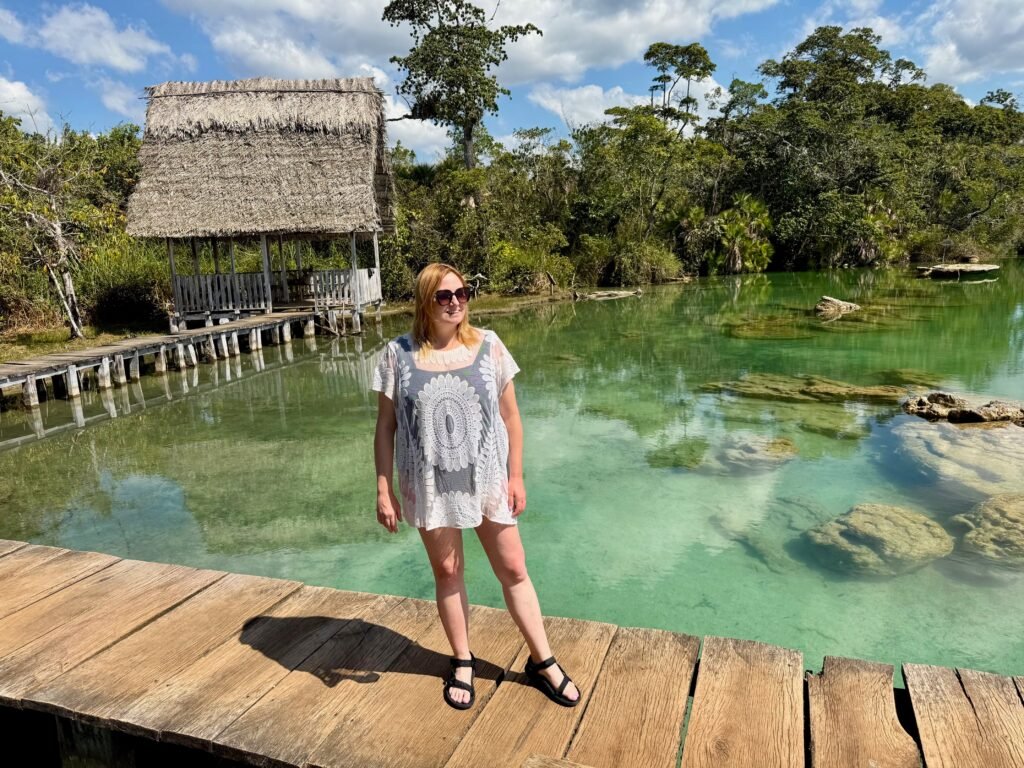
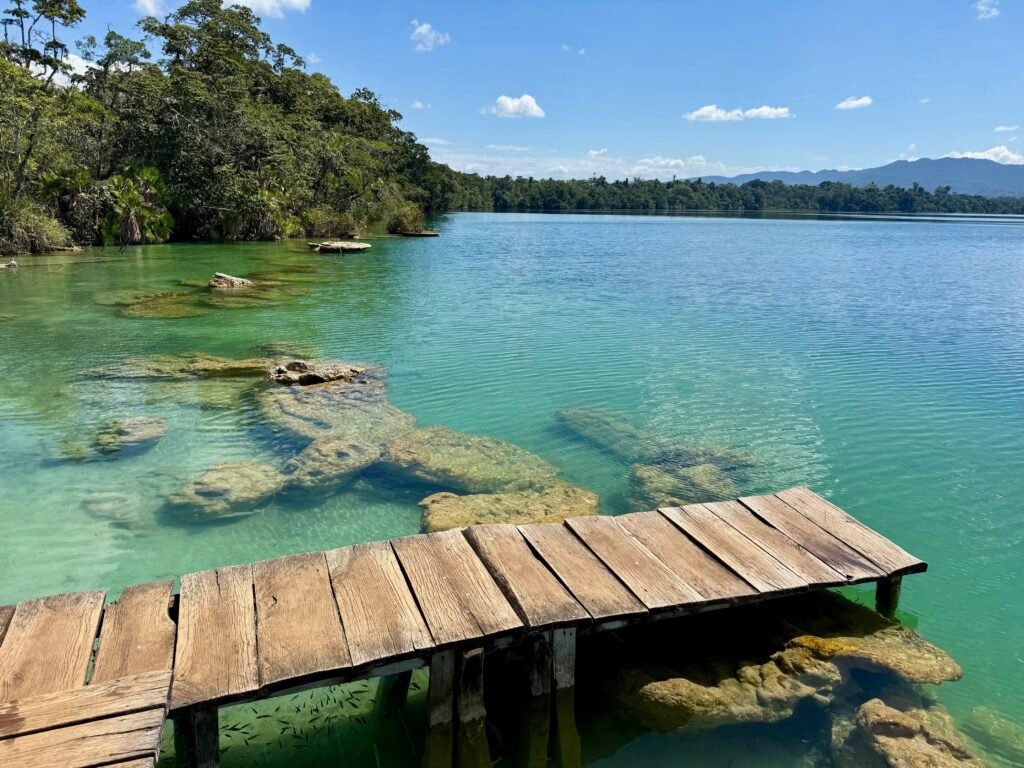
Laguna Lachuá is one of my favorite places to visit in Guatemala! This is a beautiful cenote lake located in the middle of a national park in the department of Alta Verapaz. It takes a while to get here from most places in Guatemala, but it’s completely worth the trip! We have only been here once time but I have all the information you’ll need if you want to visit.
The lake itself is a karstic formation — essentially a sinkhole of extraordinary proportions, measuring about 5 km across and 220 meters deep. Its water is colored a vivid turquoise by dissolved calcium carbonate, and it carries a faint sulfurous scent from petroleum deposits beneath — which is actually what gave it its Q’eqchi’ name: “li chu ha,” meaning “the fetid water.” The smell is subtle, and we actually didn’t notice it at all when we were there.
Laguna Lachuá is quiet because it’s in such a remote part of the country and away from the typical tourist destinations. Moreover, the park limits the number of guests per day. The cost to enter is 25 Quetzales ($3.28) for Guatemalans or those with residency and 50 Quetzales ($6.56) for foreigners. You’ll need to pay cash at the entrance to the park, and the park rangers will spend time explaining (in Spanish) the rules and how to get to the lake from the entrance.
Since Laguna Lachuá is located in the middle of a protected rainforest in a national park, it takes approximately 30 minutes to walk through the jungle on a well-marked, flat trail and to arrive at the first viewpoint of the lake. There are signs along the way (in Spanish) explaining the type of wildlife you can view in the park. When you arrive at the first viewpoint, you’ll stand on a dock but won’t be able to swim. You’ll need to keep walking to arrive at the swimming area.
It takes approximately another 30-minutes to arrive at the camping area and the entrance to the lake with the swimming area. Something to note about the trail is that since it’s flat and covered by trees, it’s an easy hike and not too hot. I think it’s easy to navigate the park and explore on your own. However, if you prefer to hire a guide, then you can contact Abner. He lives in a city nearby and is not an INGUAT-certified guide; however, he knows the departments of Alta Verapaz, Quiché, and Huehuetenango very well. He does not speak English, and his phone number is +502-4272-5808.
The camping area has a few basic cabins, a shared kitchen, and a shared bathroom. We did not stay here, but the park ranger gave us a quick tour of the facilities since we hope to stay at the campsite next time. One thing to note is that they don’t have electricity or air conditioning. They do offer solar power so you can charge your devices and cook. We have been told by the locals that the sunsets here are amazing, and this is the best reason to stay at the campsite.
If you want to stay at the campsite, you can contact the park staff on WhatsApp at +502-5800-1405. As I mentioned, we did not stay here. So I don’t have a review to provide.
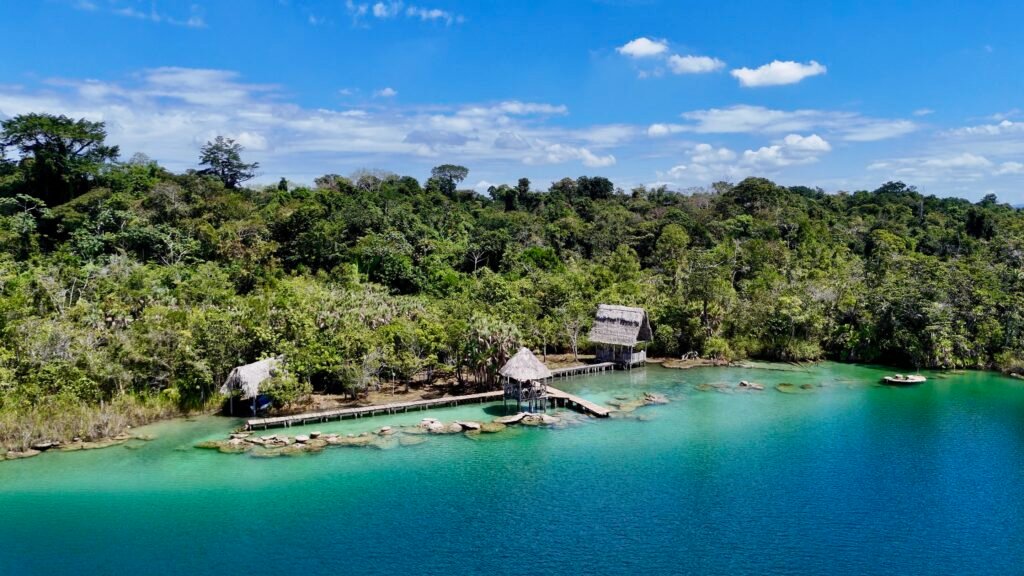
Swimming is permitted at the lake — and genuinely wonderful — but no sunscreen or insect repellent is allowed in the water. Unless you bring all-natural and eco-friendly sunscreen, you should leave it behind at the park entrance. They also don’t allow snorkeling gear inside the park because they don’t want tourists bothering the fish. There are crocodiles in the lake but not in the swimming area during the day. The crocodiles are active at night, which is why tourists are only allowed to enter the lake during daylight hours.
The crocodiles found in this lake are not the typical American crocodiles. These are the Morelet’s crocodiles, which are less aggressive. We did not see any crocodiles during our visit, and they are not a threat to tourists who want to swim and explore.
There is not much else to do in the park but to swim and relax in the water. The lake is so beautiful that you won’t want to leave or do anything else. I recommend bringing a packed lunch, snacks, and drinks since you won’t find any restaurants or food for sale here. The kitchen area is only for the guests who book a stay at the cabins.
Hotels:
Most people who visit Laguna Lachuá stay in the city of Playa Grande Ixcán, which is approximately 30 minutes west of the entrance to the national park. There are a few hotels and restaurants in this city, but since it’s not a typical tourist area, they are very basic but budget-friendly. The city itself doesn’t have much to see or do. For the most part, tourists only stay here to visit Laguna Lachuá.
We stayed at Hotel & Restaurante La Fonda del Río Negro and can recommend this. The stay wasn’t perfect, but it’s probably the nicest hotel in the area. The restaurant menu is extensive, and they open early (at approximately 6:45 am), which is great if you want to arrive early at Laguna Lachuá. The wi-fi worked well, and the rooms looked worn, but they were clean. The room we stayed in had a private bathroom and air conditioning, which, in my opinion, is necessary since it’s so hot in this part of Guatemala. The hotel has an outdoor pool.
We paid 225 Quetzales per night for a double room including breakfast. It is not possible to book any hotels online in this part of Guatemala. You’ll need to contact the hotel via WhatsApp to make a reservation, and they’ll expect a deposit to be transferred to their bank account to confirm the reservation. They might offer booking through credit card, but it will most likely be with an extra fee. The WhatsApp number for the hotel is +502-45429157.
If you don’t have a local bank account in Guatemala, then I recommend using a service such as Remitly to transfer money between international banks. They offer great exchange rates, low fees, and quick transfers. I’ve used Remitly many times to send money to Guatemala. Click here to download the app.
There is another hotel in the area that seems to offer similar-style rooms with breakfast. It’s called Hotel Posada Colonial, and I am sharing this as an option in case the other hotel is completely booked during your stay. We did not stay here, so I can’t provide a review, but you can contact the hotel to receive a quote and make inquiries. Their WhatsApp number is +502-4654-5695, and they quoted me 250 Quetzales ($33 USD) for a double room and 350 Quetzales ($45 USD) for a triple room.
Tours and Transportation:
Laguna Lachuá is far from most of the popular tourist destinations in Guatemala. It’s just over an hour from the border with Mexico and in the northern part of the department of Alta Verapaz. It takes approximately 3.5 hours to drive to the entrance of the national park from Cobán, 5 hours from Lanquin (Semuc Champey), 6 hours and 30 minutes from Flores (Tikal), and 8 hours from Guatemala City.
If you want to visit Laguna Lachuá on a day trip, I recommend booking this tour from the city of Cobán. It’s a long day trip but completely worth it, and everything will be taken care of for you, including transportation, a guide, and lunch.
Another option is to book a 2-day trip from Guatemala City to visit Semuc Champey and Laguna Lachuá. This trip will include transportation and a guide.
If you don’t want to book a guided tour, then you can hire a private driver with GuateDriver. They have professional drivers who can take you anywhere in Guatemala and even across the border into Mexico, El Salvador, Honduras, or Belize. I’ve hired them a few times, and they offer competitive prices and great experiences. Their WhatsApp number is +502-3775-7831. You’ll need to contact them for a quote based on the dates, times, number of people, and destinations.
If you want to rent a vehicle, then I recommend selecting a 4X4 because many of the roads aren’t paved in this part of Guatemala. Click here to compare rental car rates in Guatemala.
Boca del Peyán (Río Chixoy, Ixcán, Quiché)
Boca del Peyán is another remote and incredible place to visit in Guatemala. It’s technically located in the department of Quiché, but I’m including it in this guide for the department of Alta Verapaz because it’s right along the border and the boat tour here crosses both departments. Moreover, anyone who visits will likely stay in Playa Grande Ixcán and visit Laguna Lachuá as well. This destination is a natural extension for a road trip through Alta Verapaz.
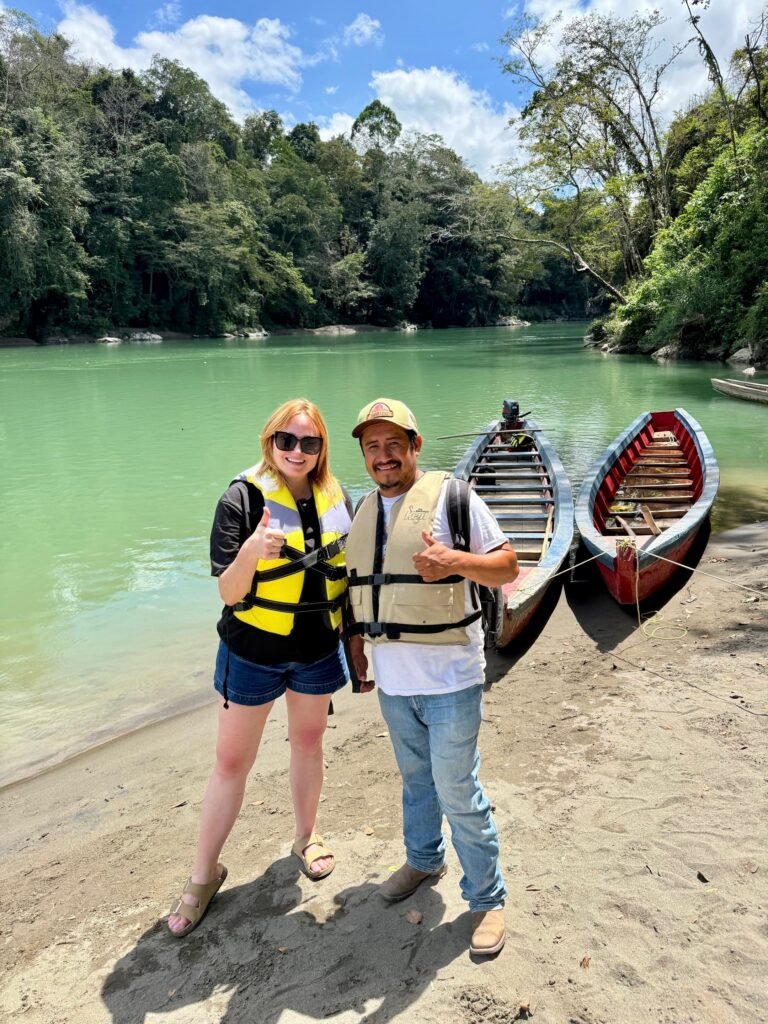
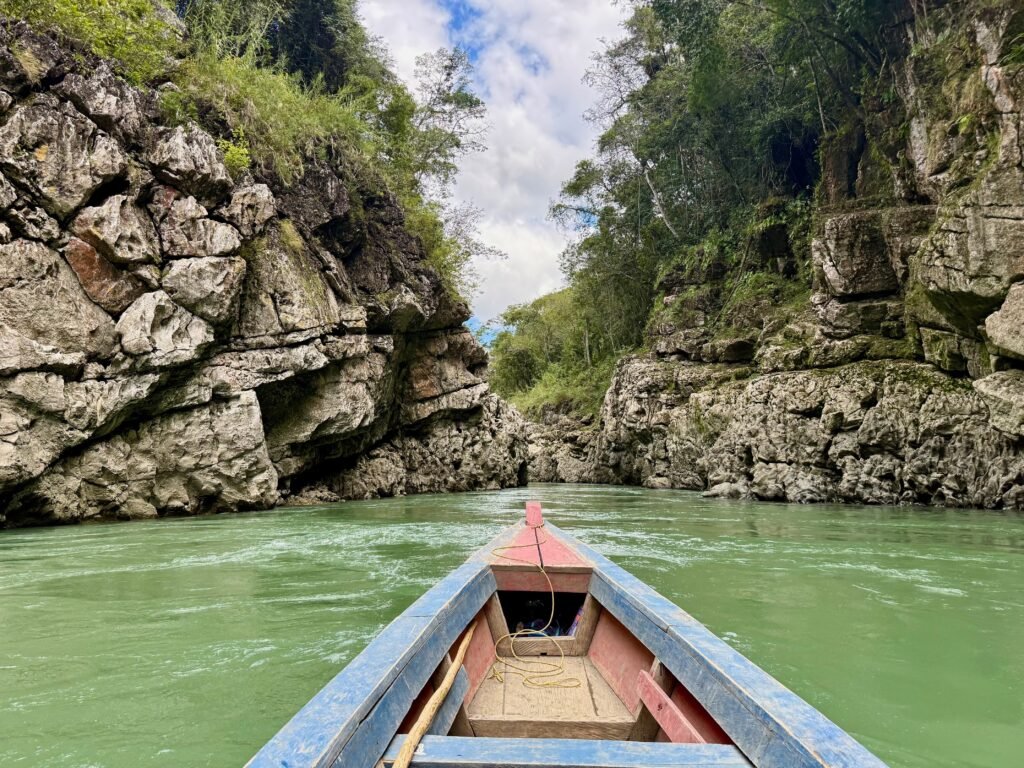
Boca del Peyán is an adventure tourism portal and a natural landmark where the Chixoy River narrows to 3 meters wide (10 feet) through towering limestone cliffs. This narrow passage creates deep turquoise waters, unique rock formations, and swift currents known as “El Paso del Tigre.” Boat tours are offered from near the town of Horizonte, which is approximately 40 minutes south of the city of Playa Grande Ixcán.
The tour is offered by speedboat, and it’s a beautiful ride along the Río Chixoy to reach the peyán, where the canyon walls are dramatic. The boat will continue on to a viewpoint where you’ll be able to exit the boat and climb a few stairs to a resting area above the river. The guide exited the boat with us and took us to the viewpoint.
A man named Jairo Leal owns the boat tour company, and he offered us a 2-hour tour for 500 Quetzales ($66 USD). Since we always take extra time to capture photos and videos, the tour took approximately 2.5 – 3 hours for us, and it wasn’t a problem the owner. If you want to book this tour, you can contact Jairo on WhatsApp at +502-5882-4008. Of course, you’ll need to pay cash for the tour.
We loved the experience as it felt like we were on a boat ride in a Jurassic Park movie. We heard howler monkeys for approximately 5-10 minutes of the boat ride, and since it’s such a remote place, there was no one else on the river. We had the entire experience to ourselves!
If you contact Jairo, he will send you his exact location so that you can arrive and park at his house. The boats he uses are in front of his house and located right next to the river. When we were there in March 2026, he was building cabins so that tourists can stay in this beautiful location. When we visited, he gave us a tour of the cabins and confirmed that he would be able to offer overnight stays in the near future. You can contact him via WhatsApp to inquire about the tours he offers and the cabins. If not, then I recommend staying in the city of Playa Grande Ixcán.
Hotels:
Most people who visit Boca del Peyán also visit Laguna Lachuá and stay in the city of Playa Grande Ixcán. There are a few hotels and restaurants in this city, but since it’s not a typical tourist area, they are very basic but budget-friendly. The city itself doesn’t have much to see or do.
We stayed at Hotel & Restaurante La Fonda del Río Negro and can recommend this. The stay wasn’t perfect, but it’s probably the nicest hotel in the area. The restaurant menu is extensive, and they open early (at approximately 6:45 am), which is great if you want to arrive early at Laguna Lachuá or Boca del Peyán. The wi-fi worked well, and the rooms were very worn but clean. The room we stayed in had a private bathroom and air conditioning, which, in my opinion, is necessary since it’s so hot in this part of Guatemala. The hotel has an outdoor pool.
We paid 225 Quetzales per night for a double room including breakfast. It is not possible to book any hotels online in this part of Guatemala. You’ll need to contact the hotel via WhatsApp to make a reservation, and they’ll expect a deposit to be transferred to their bank account in order to confirm the reservation. They might offer booking through credit card, but it will most likely be with an extra fee. The WhatsApp number for the hotel is +502-45429157.
If you don’t have a local bank account in Guatemala, then I recommend using a service such as Remitly to transfer money between international bank accounts. They offer great exchange rates, low fees, and quick transfers. I’ve used Remitly many times to send money to Guatemala. Click here to download the app.
There is another hotel in the area that seems to offer similar-style rooms with breakfast. It’s called Hotel Posada Colonial, and I sharing this in case the other hotel is completely booked during your stay. We did not stay here, so I can’t provide a review, but you can contact the hotel to receive a quote and make inquiries. Their WhatsApp number is +502-4654-5695, and they quoted me 250 Quetzales ($33 USD) for a double room and 350 Quetzales ($45 USD) for a triple room.
Tours and Transportation:
Boca del Peyán is far from most of the popular tourist destinations in Guatemala. It’s just over an hour from the border with Mexico and in the northern part of the department of Quiché and along the border of the department of Alta Verapaz. It takes approximately 4 hours and 20 minutes to drive here from Cobán, 5 hours and 20 minutes from Lanquin (Semuc Champey), 7 hours from Flores (Tikal), and 9 hours from Guatemala City.
To get here, I recommend hiring a private driver with GuateDriver. They have professional drivers who can take you anywhere in Guatemala and even across the border into Mexico, El Salvador, Honduras, or Belize. I’ve hired them a few times, and they offer competitive prices and great experiences. Their WhatsApp number is +502-3775-7831, and you’ll need to contact them for a quote based on the dates, times, number of people, and destinations.
If you want to rent a vehicle, then I recommend selecting a 4X4 because many of the roads aren’t paved in this part of Guatemala. Click here to compare rental car rates in Guatemala.
Weather in Alta Verapaz
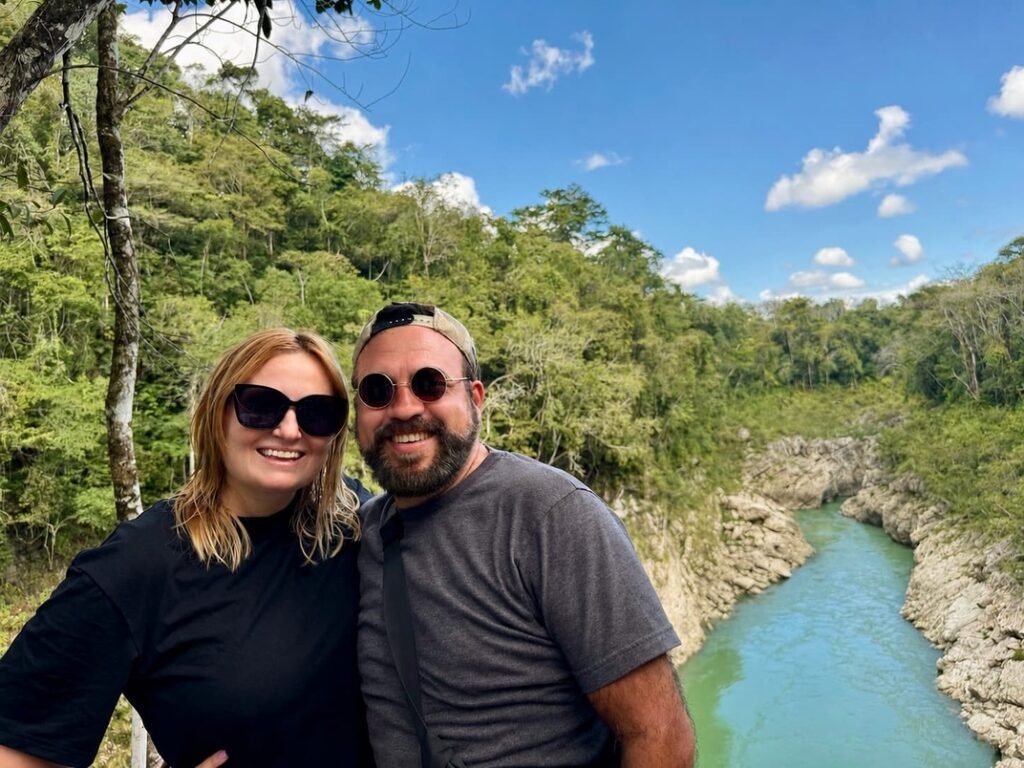
Alta Verapaz features a subtropical highland and microthermal climate. It’s particularly known for having dense, misty rainforests and consistent precipitation. The year-round temperatures are mild, with average highs ranging from 23 (73.4 Fahrenheit) to 27 degrees Celsius (77 Farenheit). Nighttime and early morning temperatures frequently drop to a cooler 15 degrees Celsius (59 Fahrenheit) to 17 degrees Celsius (62.6 Fahrenheit). One thing to note is that there is a regional variation in the department, as the areas near Cobán and Grutas del Rey Marcos are cooler and mistier due to higher elevations. Meanwhile, the lowlands in the north, such as Laguna Lachuá.
This region of Guatemala is very humid and experiences frequent rainfall and heavy, persistent fog. The rainy season begins in the middle of May and ends in October. Therefore, the best time to visit is from November until April. The driest and warmest months are March and April. The last time we visited was the first week of March, and the weather was perfect.
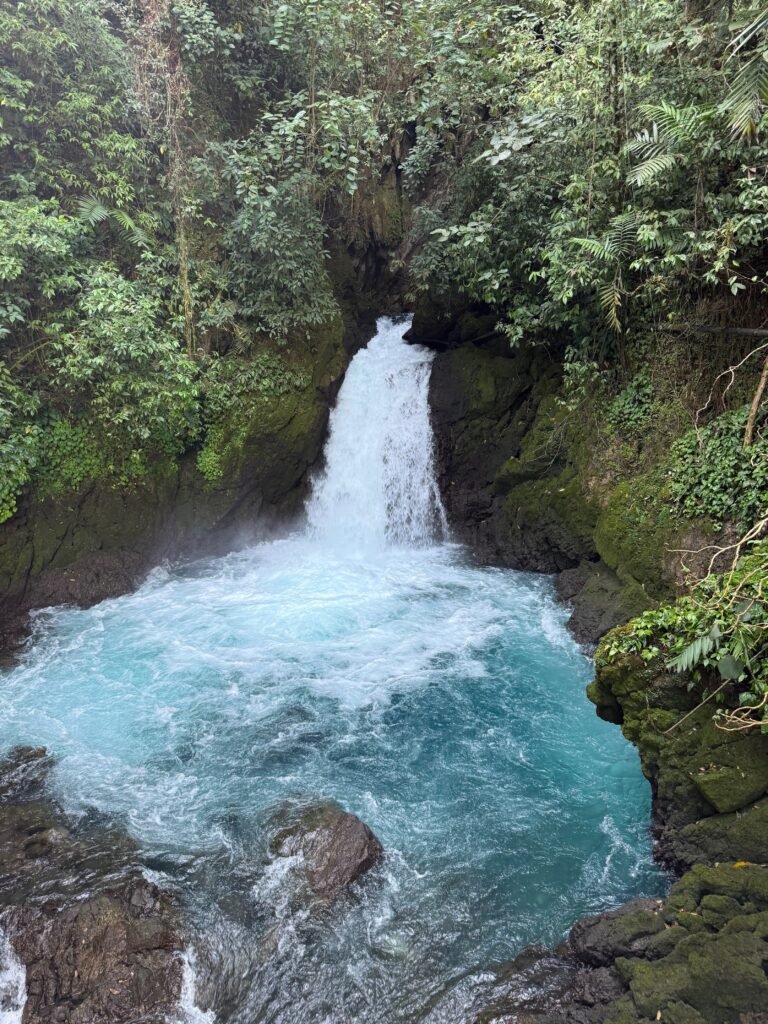
As I mentioned above, I recommend visiting during the dry season as some of the rivers and natural pools can flood over and the color changes. For example, when we initially went to Hun Nal Ye in September, the water was a slimy green color instead of turquoise and clear. Moreover, Semuc Champey can flood over a few times per year, and the pools change from turquoise and clear to brown. Most of the time during the rainy season, the waters are fine, but this can happen.
Considering the weather, I recommend packing a lightweight jacket, a rain jacket, swimsuits, watershoes, shorts, pants and long sleeves for the evenings, and insect repellent since it can be humid and buggy.
.
Is it Safe to Visit Alta Verapaz?
The number one question I’m asked about traveling to Guatemala is whether I feel safe or not. I’ve been to the department of Alta Verapaz three times and felt safe each time. I wouldn’t hesitate to return to any of the destinations I visited and I think with normal precautions, most travelers would feel safe in Alta Verapaz.
As someone who has traveled extensively around Guatemala, my experience is that the remote areas and the tourist sites are safe. Including the areas near the border with Mexico. It’s mostly the capital city and surrounding areas that have felt unsafe to me and where I’ve been extra cautious.
If you are concerned about safety in Guatemala, then I recommend booking a tour or hiring a private driver with GuateDriver. In my opinion, one of the most dangerous things someone can do in Guatemala is drive because most tourists aren’t accustomed to driving here. Many local drivers don’t have vehicle insurance, and they don’t follow the local laws. For extra peace of mind, I recommend hiring a private driver instead of renting a car.
What to Pack
- Sturdy waterproof hiking shoes or boots (sandals will let you down in the caves and on wet jungle trails)
- Sturdy waterproof hiking sandals for swimming in the natural pools, lakes, and rivers and for climbing the stairs to the mirador at Semuc Champey
- Headlamp with fresh batteries (bring this even if tours provide one)
- High-DEET insect repellent
- Swimsuit and quick-dry towel
- Lightweight rain jacket (rain can arrive fast, especially in the north)
- Cash in quetzales (ATMs exist in Cobán; beyond Cobán, don’t assume you’ll find one)
- Reusable water bottle — minimize plastic
- Food if heading to Laguna Lachuá overnight
Guatemala Travel Tips
🏩 Medical emergencies and travel insurance
Guatemala’s public (free) healthcare system is not very good, but you can find very high-quality private healthcare available in the country. However, if you need to visit a private hospital, you could possibly be required to pay thousands of dollars upfront. This is why every tourist in Guatemala should have a travel insurance policy.
I recommend Safety Wing because they offer health and travel insurance, including a simple claims process and great customer service! The insurance plans cover hospital stays, medications, surgery, travel delays, lost luggage, and more. You can click here to read more and to sign up for a plan.
🗣️ Language
Most people in Guatemala speak Spanish and not English. Therefore, it’s important to at least learn the basics to be able to communicate with people. In the tourist areas, you’ll find some people who will speak a bit of English but also many travel guides who speak English very well. The majority of drivers, people on the buses, shop owners, wait staff, etc., do not speak English.
The online language program I’ve used with the most success is Rocket Languages. I like Rocket Languages because the platform prioritizes conversational fluency and active speaking over flashcards and gamification (compared to many other language learning tools). Rocket Languages has interactive audio lessons, advanced speech recognition, and comprehensive grammar. They offer both an online and mobile option for using the platform, and you can click here to check it out.
💰 Cash, credit cards, and ATMs
You can use your credit cards in many restaurants and hotels in the main tourist areas in Guatemala. However, there are cash-only places such as small local restaurants, markets, tuk-tuk drivers, lancha (boat) transportation, tips, and more. You will absolutely need cash, and I recommend using the local ATMs to take out cash for a small fee (do not use the money exchange at the airport, as they have a very bad rate).
If you’re traveling from the U.S., many banks will allow you to pre-order Quetzales at a very good rate. This is what I’ve done through Wells Fargo many times while traveling back and forth between Guatemala and Florida.
📱 Internet & data
Most hotels, hostels, Airbnbs, and restaurants will have free wi-fi. Although sometimes it works well, at times it doesn’t! If you need consistent data and wi-fi access, then I suggest downloading an app with an eSIM. Now that I live in Guatemala, I use a local SIM, but when I was initially traveling here, I used an Airalo eSIM. This was easy to set up and convenient, rather than wasting time going into the Tigo or Claro store in Guatemala to get a physical SIM. You can click here to download the app and set up service.
🛌 Hotels & Accommodation
The website I recommend using to find hotels and apartments in various destinations in Guatemala is Booking.com. In my opinion, this is the platform with the most extensive options in Guatemala and for competitive prices. You can search on Booking.com by date, location, and preferences such as free parking, air conditioning, a private bathroom, review score, etc.
🚗 Transportation in Guatemala
In Guatemala, you can use tourist shuttles or private buses to transfer around the country but also, hire a private driver. To search for the best option for a private bus or shuttle, I recommend checking out the platform Guatego.com. This platform will give you all the best options every day, with the prices and times for the transfers. If you want to hire a private driver, then I recommend contacting GuateDriver to receive a quote. You can contact them on WhatsApp at +502-3775-7831 or at info@guatedriver.com.
👂 Noise cancellation
I recommend traveling to Guatemala with earplugs because this country can be LOUD. I am not exaggerating, as there are often roosters crowing, loud motorcycles, dogs barking, and weddings or celebrations with fireworks. If you bring earplugs with you, then you can thank me later. Click here for my favorite earplugs.
🥑 Food & Water
In Guatemala, the water from the faucet is not safe to drink; however, most restaurants will serve a glass of filtered water or bottled water. Many restaurants will insist that tourists buy a bottle of water, which costs money compared to a free glass of water, and it’s worse for the environment. However, most restaurants, especially in Guatemala City or the tourist areas, will serve you a free glass of filtered water. Whenever I’m in a sit-down restaurant, I’ll tell them I want “vaso con agua,” which means I want a glass of water instead of bottled water. If you’re worried, then you can order bottled water everywhere, but I haven’t had a problem ordering and drinking filtered water at sit-down restaurants.
I also recommend traveling to Guatemala with a water bottle with a built-in filter. I use the LifeStraw bottle in Guatemala, and it completely filters out any of the bad stuff and works well! You can buy this online by clicking here. Also, if you’re the type of person who has a sensitive stomach, then I recommend avoiding street food or eating anything raw. Usually, the raw vegetables are fine, but as an extra precaution, I would skip those.
Something else to note is that tourists often get sick from eating street food or food from local markets in local areas. Unfortunately, I’ve had a parasite two times, and I needed to take medication to get rid of it. This can be very uncomfortable and can greatly interrupt your trip. Therefore, if you’re worried at all or if you already know that you have a sensitive stomach, then I would skip eating street food or food from the local market unless you’re at the Central Markets in Antigua or Guatemala City.
I’ve never been sick from the food at sit-down restaurants in Guatemala or the markets in Antigua or Guatemala City. However, travelers have commented on my posts to let me know they have been sick. I think it’s important to bring medicine for diarrhea in your luggage and be prepared with travel insurance just in case. Most likely you won’t have a problem, but anything can happen.
🔑 Portable safe
In my experience, many hotels in Guatemala do not have a safe. Therefore, I recommend buying a portable safe that can be locked to many different fixtures in a hotel room. You can put your laptop, passport, extra cash, etc. inside this safe and hide your valuables. Click here to buy the portable safe I’ve always used in Guatemala.
☀️ Sun protection
It can get very sunny in Guatemala, and sunblock can be expensive to buy in the country. Oftentimes it’s double or triple the price, so whenever I’m in the U.S., I’ll stock up and bring it back with me. Click here to buy the sunscreen I always use for my face, and this is the natural sunscreen I buy for my body.
🧭 Navigation
Most people in the U.S. tend to use Google Maps, but after living in Guatemala for a few years and traveling all over, I recommend using Waze. This is what my Guatemalan husband uses to drive around the country, and I’ve noticed that it works much better than Google Maps. For example, there are often road closures, and drivers will need to be rerouted. Waze always shows us these closures, but Google Maps does not. Also, I tried to use Google Maps in the department of Huehuetenango, but it took us to roads that did not exist. Therefore, I recommend downloading this and using it in Guatemala if you decide to drive yourself or if you want to track the route of your personal driver.
Do You Need More Help Planning a Trip to Guatemala?
Check out my Ultimate Guide for Guatemala! This blog post provides an introduction to traveling to Guatemala, a high-level overview of how to plan a trip, what to expect, and my best travel tips for the country. Click here to review this guide.
You can also check out my guides for specific destinations in Guatemala:
📍Semuc Champey + other places in Alta Verapaz
📍Río Dulce + Livingston + Playa Blanca + Puerto Barrios
📍Tikal + other places in Petén
Or, if you need help with a customized itinerary, then you can book a travel consultation with me! Click here to review my calendar with availability and the cost for this service.
Please note that some links on my site are affiliate links. This means that at no additional cost to you, I earn a small commission if you click through these links and make a booking or purchase. By using these links you’re supporting my blog so I can continue to publish content and travel recommendations for Guatemala. Something important to mention is that I only feature recommendations I believe in and use myself. Thank you!
7 Responses