
Everything You Need to Know to Visit Tikal, Yaxhá, Flores, and other places in Petén, Guatemala
Why should you trust me and take my advice?
I moved to Guatemala to be with my husband, and I’ve been lucky to call this country my new home. We spend most of our free time traveling all over Guatemala, and we have traveled multiple times to the most popular tourist destinations. We’ve been to the department of Petén four times, and my advice and travel tips are based on extensive experience.
If you have a long list of questions or need help creating a customized Guatemala itinerary, please click here to book a travel consultation with me. For an introduction to traveling to Guatemala, click here for my Ultimate Guatemala Travel Guide.
What is the Department of Petén and Why Should You Visit?
The Department of Petén is Guatemala’s northernmost department and by far its largest. It borders Mexico to the north and west, Belize to the east, and the departments of Izabal and Alta Verapaz to the south.
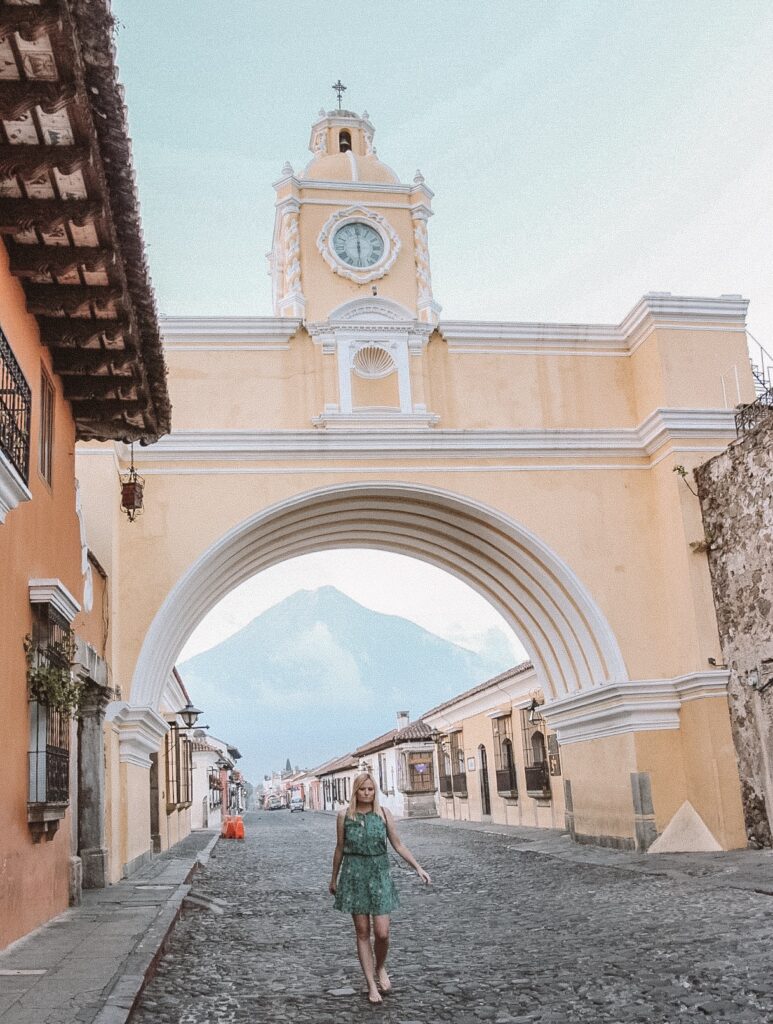
When many people think of Guatemala, they picture Antigua’s colonial streets, Lake Atitlán’s volcanoes, or the colorful markets of the highlands. But Petén offers an entirely different side of the country.
This is the land of dense tropical rainforest, ancient Maya cities, freshwater lakes, winding rivers, and some of Guatemala’s most remote archaeological sites. Petén is also home to an extraordinary amount of Guatemala’s Maya heritage, including Tikal, Yaxhá, Uaxactún and the enormous archaeological site of El Mirador.
And Petén isn’t just about ancient ruins.
You can spend the morning exploring a Maya city hidden in the jungle, swim in extraordinarily clear turquoise water in the afternoon, and watch the sunset over Lake Petén Itzá in the evening. The region combines archaeology and adventure in a way that is difficult to find anywhere else in Guatemala.
For travelers, Flores is usually the starting point for exploring Petén. The colorful island sits in Lake Petén Itzá and has restaurants, hotels, shops, and tour operators, making it a convenient base for exploring the surrounding region. However, Flores is only a small part of an enormous department. Once you leave the island, you can find ancient cities deep in the rainforest, wildlife-filled protected areas, traditional communities, and natural attractions that require boats, hiking, or several hours of travel to reach.

Places to Visit in Petén
There is enough to see in Petén to fill several trips, but eight destinations stand out as particularly memorable: Flores Island, Tikal, Yaxhá, El Mirador, Uaxactún, Nuevo Horizonte, El Remate, and Cráter Azul.
Each offers a completely different experience.
Flores Island
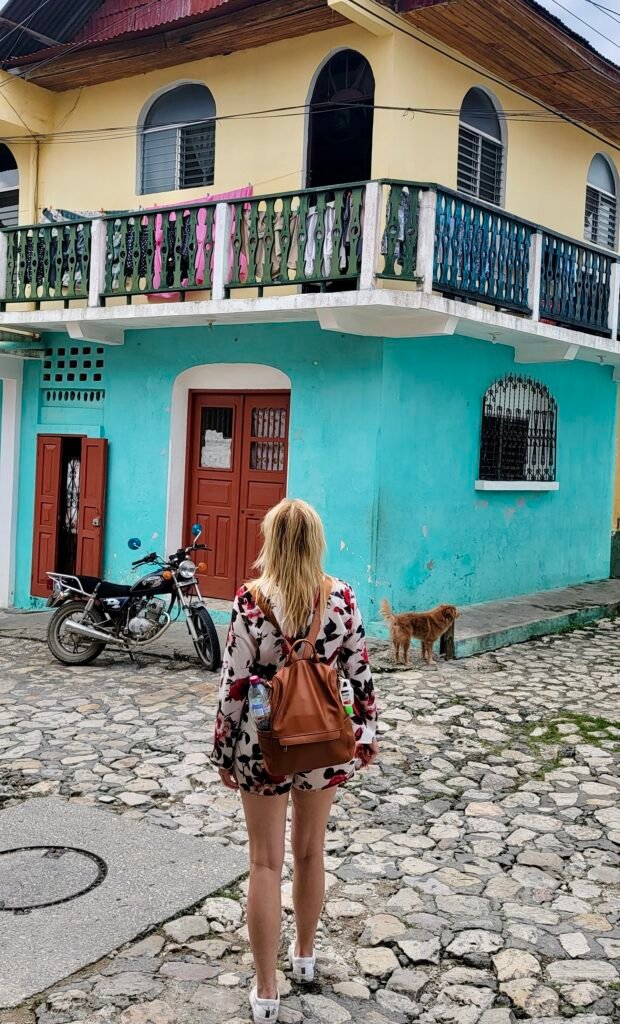
Flores Island is the colorful, lively base for exploring the region. Located in Lake Petén Itzá, the island is small enough to explore on foot, with cobblestone streets, colorful buildings, restaurants, cafés, and lake views. It is also where many travelers stay before heading out to the archaeological sites and natural attractions around Petén.
It’s convenient to stay on Flores Island since it’s so close to the airport, there are many restaurants and activities nearby, and it’s centrally located to other destinations in the area. For example, Crater Azul is approximately 2 hours southwest of Flores, while Tikal National Park is 1 hour and 20-30 minutes to the northeast of Flores. Moreover, for anyone who wants to visit El Mirador by helicopter or a hiking tour, these excursions leave from Flores.
Flores Island is part of the city of Flores. It’s located in the lake and connected to the rest of the city by a bridge. You can find below a list of all my recommendations, including hotels, restaurants, and activities.
Hotel Recommendations in Flores
Many tourists stay in a hotel on Flores Island or in the jungle close to the Maya archaeological sites. If your goal is to only visit Tikal, then I recommend staying at one of the hotels close to the site. If you would like to visit other places in the area, then you should stay in one of the hotels listed below in Flores.
Something to note is that most of the luxury hotels in Petén are located in the jungle or along the lake. The hotels in Flores are mostly backpacker-style hostels or mid-range hotels. Many are very nice, but if you’re looking for the most luxurious hotels, then I have additional recommendations which you’ll find by continuing to read this blog post.
🛌 Hotel Casa Amelia: This is a budget-friendly hotel with views of the lake. The rooms have air conditioning, and there is an on-site restaurant. Click here to review details and book.
🛌 Hotel Villa del Lago: This is a mid-range priced hotel located along the lake featuring beautiful views, air-conditioned rooms, and a terrace. Click here to review details and book.
🛌 Hotel Casa Azul: Another mid-range priced hotel located along the lake with air-conditioned rooms. Each room has a shared terrace. Click here to review details and book.
🛌 Hotel Isla de Flores: This is another mid-range priced hotel located near the central park. There is an outdoor swimming pool on the terrace, and each room has air conditioning. Click here to review details and book.
Restaurant recommendations in Flores
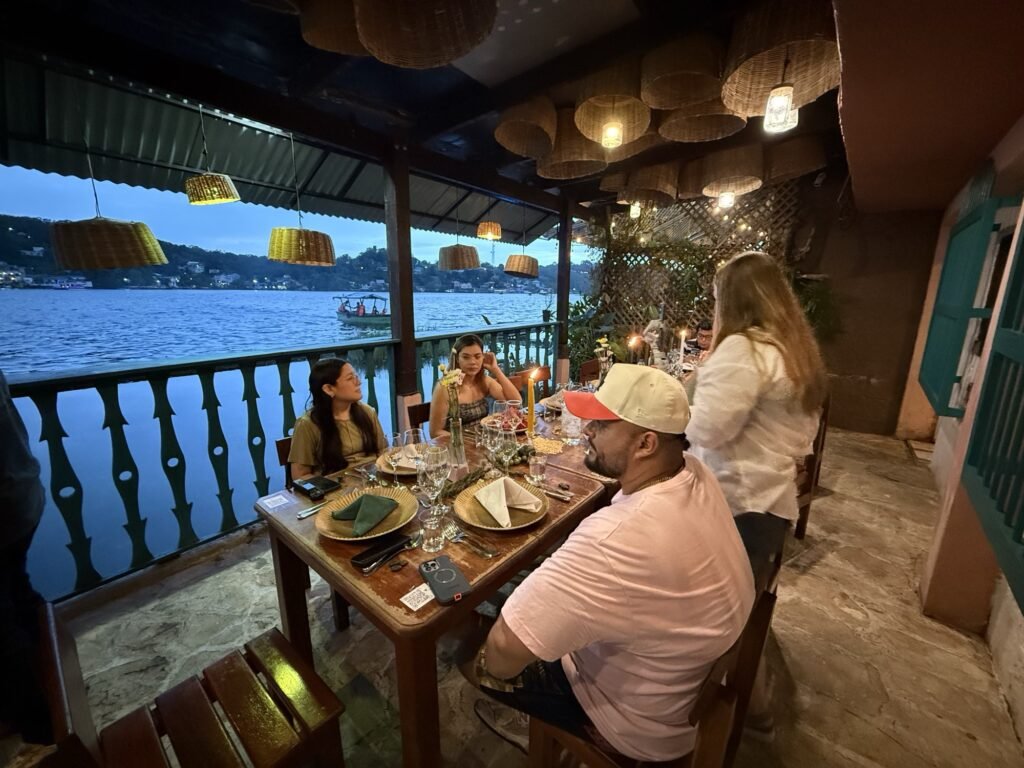
🍽️ Restaurante Raices: This is a waterfront restaurant serving artesanal cuisine with both traditional Guatemalan options and international foods. The food is so delicious.
🍽️ Restaurante Maracuyá: This restaurant has an amazing view from the terrace with both traditional Guatemalan options and international foods. They have great vegetarian and healthy options. The food is delicious, but one thing to note is that the service was very slow when we were there. We are hoping to have better service the next time.
🍽️ La Danta Restaurante: This is one of the best traditional restaurants I’ve been to in Guatemala. They focus a lot on regional foods from Petén, which I noticed were different compared to traditional restaurants in other parts of Guatemala. They have a display to explain the types of traditional foods and the ingredients. Everything was so delicious and I 100% recommend this restaurant!
🍽️ Sky Bar: This is a very popular rooftop bar on Flores Island. Many people come here to watch the sunset.
🍽️ La Casa de Enrico: This is another waterfront restaurant offering a mix of Italian and local food. It’s a beautiful setting, and the food is delicious.
Activities + Tours in Flores
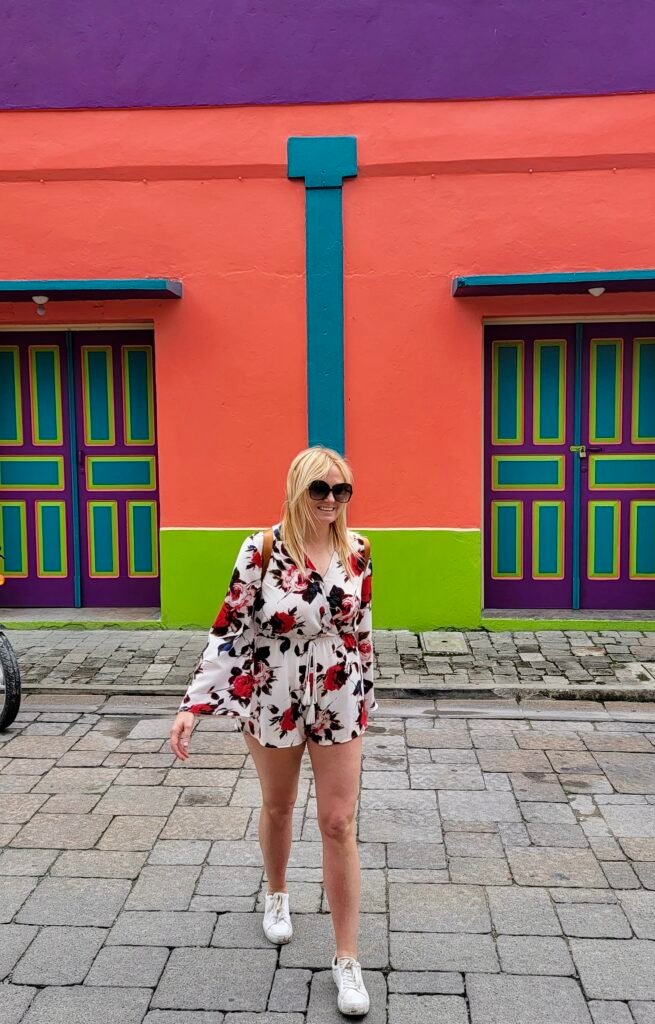
✅ Walk the colorful streets: The island of Flores is small, and it’s easy to walk the streets visiting different bars, restaurants, and small shops. There is a main square and cathedral, which is easy to find.
✅ Visit San Miguel: It’s possible to hire a boat captain to bring you to a town on the other side of the lake, which provides a panoramic viewpoint above Flores (Mirador de Canek). It’s possible to arrange a boat tour through one of the agencies you’ll find while wandering the streets or by approaching any of the speedboat owners along the shore of the lake and negotiating directly. You can also walk from here to a private beach called Chechenal. You’ll pay a small fee to enter, and boats will pick you up directly from here to bring you back to Flores, or you can walk back to San Miguel.
✅ Jorge’s Rope Swing: This is a popular place where people like to swim and jump off ropes into the water. It costs approximately 25 Quetzales to take a boat there and 10 Quetzales to enter. You can find agencies in Flores offering tours, or you can negotiate with one of the boat owners along the water.
✅ Kayaking or paddleboarding: As you’re walking around, you’ll find places in Flores Island that will rent these boards that you can take out on the lake.
✅ ARCAS Wildlife Rescue Center: You can also hire a boat to bring you to this wildlife center not far from San Miguel. The wildlife rescue also has a volunteer program.
Of course, there are many other day trips such as visiting Tikal. However, I have these listed below as separate destinations.
Tikal National Park
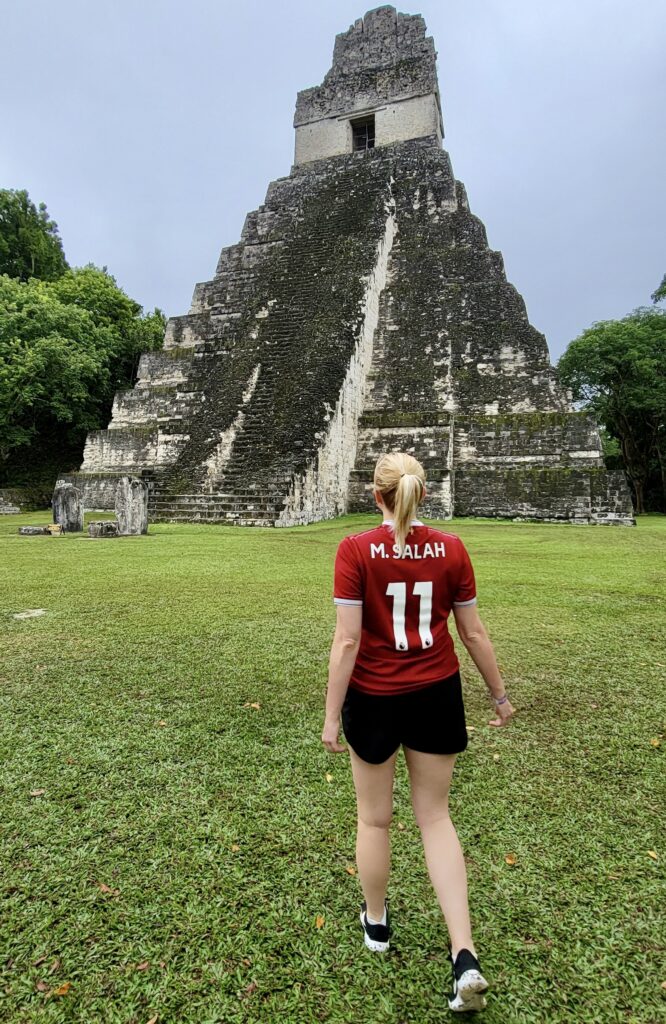
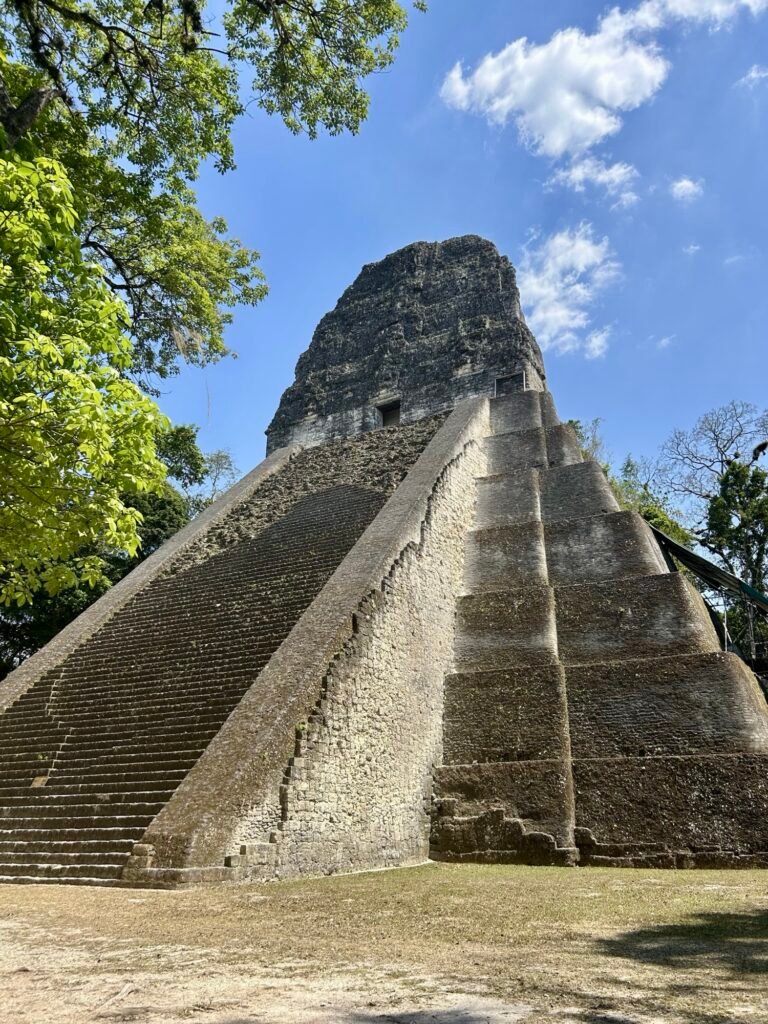
Tikal is the most famous archaeological site in Guatemala and one of the most important Maya sites in the world. Most people come to this part of Guatemala just to visit Tikal since it’s such a large and incredible site. More than 3,000 structures have been identified within the archaeological area, including enormous temples, palaces, plazas, and ceremonial complexes surrounded by rainforest. Tikal was declared a UNESCO World Heritage Site in 1979.
The park covers approximately 576 square kilometers, and what makes it so extraordinary is that when you come here, you’re not simply walking around a collection of ancient ruins. The archaeological site is embedded within the rainforest. As you walk between temples and plazas, you’ll hear birds and howler monkeys, see enormous trees growing around the ruins, and occasionally spot wildlife.
Tikal is enormous, and you could easily spend most of the day exploring the site. I recommend at least half a day but a full day if you have it. Especially since this is not the type of site you can quickly visit to see one temple and leave within an hour. The archaeological area is extensive, and there is considerable walking between the major complexes. You’ll also want time to stop, look around, take photographs, and appreciate the rainforest.
If you’re staying in Flores, a typical day trip can take most of the day once you include transportation to and from the park.
If you’re particularly interested in Maya history or archaeology, I strongly recommend hiring a guide. Without a guide, you’ll see some incredible architecture, but you’ll miss much of the historical and cultural context that makes the site so fascinating.
The standard price for foreigners to visit Tikal is 150 Quetzales (approximately $20 USD). However, if you want to visit for a sunrise or sunset tour, then you’ll need to pay an extra 100 Quetzales (an extra $13 USD). Something to note is that it is not possible to enter Tikal for a sunrise or stay longer for a sunset tour without a guide. If you need to book your Tikal entrance fee online, then you can do that here. However, some tours already include the entrance fee, so I would double-check first before paying for your ticket online.
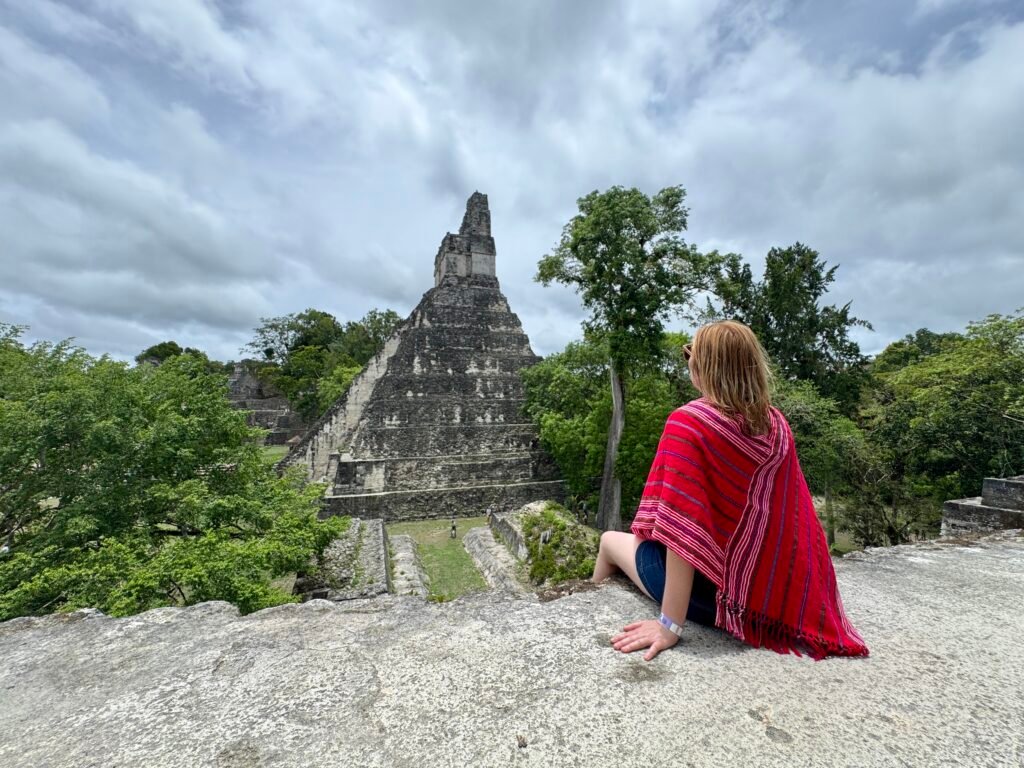
What to see at Tikal
There is so much to see at Tikal National Park, and I recommend spending as much time as possible at the site.
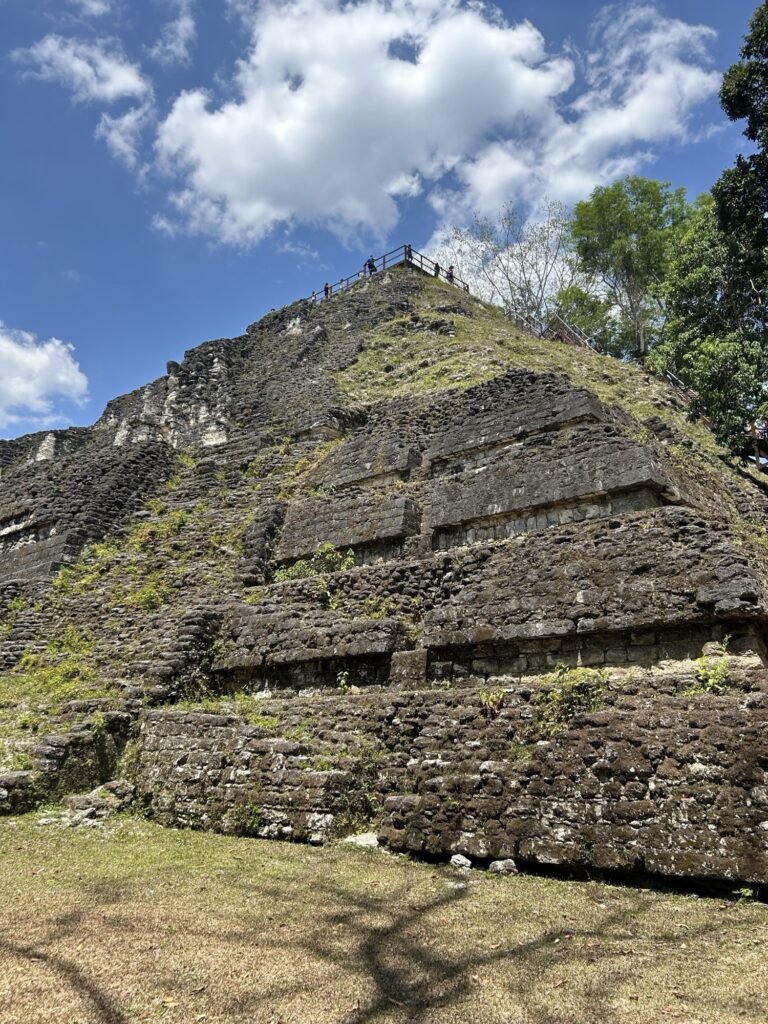
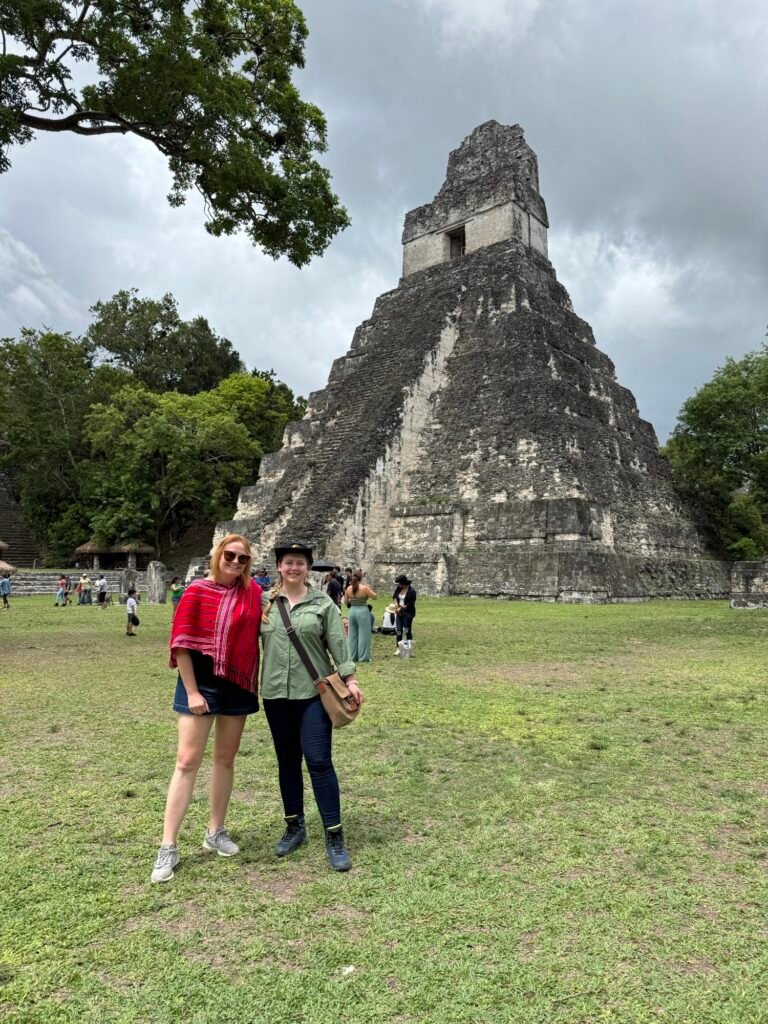
Some of the most important areas include the Great Plaza, Temple I, Temple II, the North Acropolis, Mundo Perdido, and Temple IV.
The Great Plaza is probably the most recognizable part of Tikal. It is surrounded by monumental architecture, including Temples I and II, and gives you a sense of just how enormous and sophisticated this ancient city was.
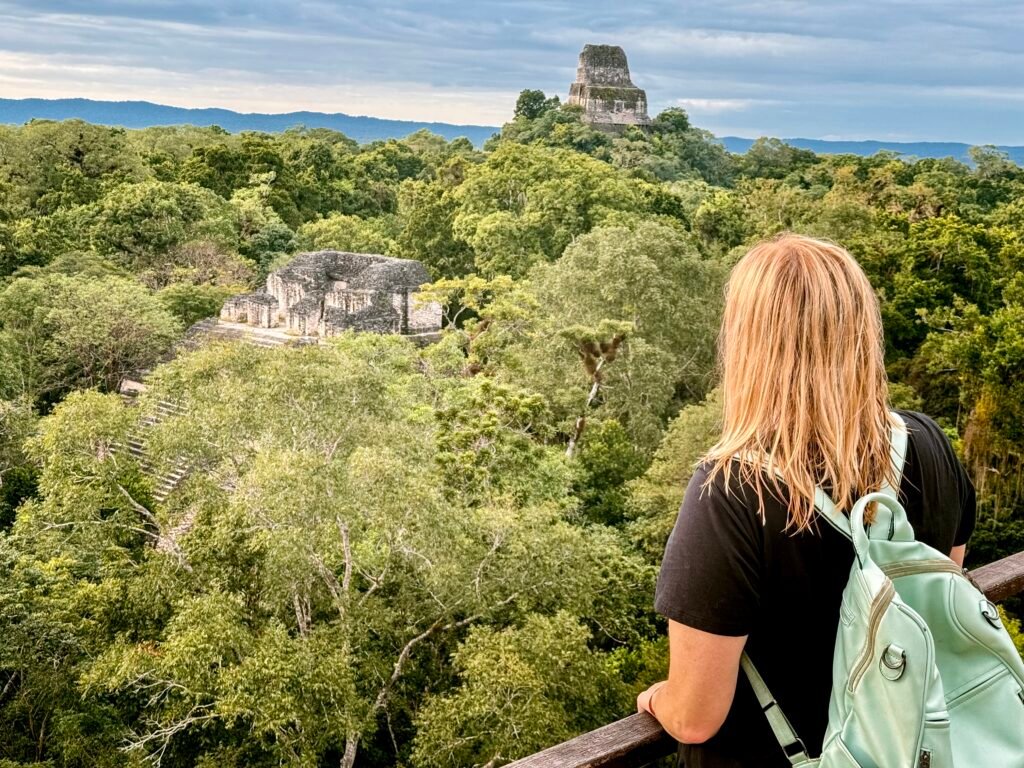
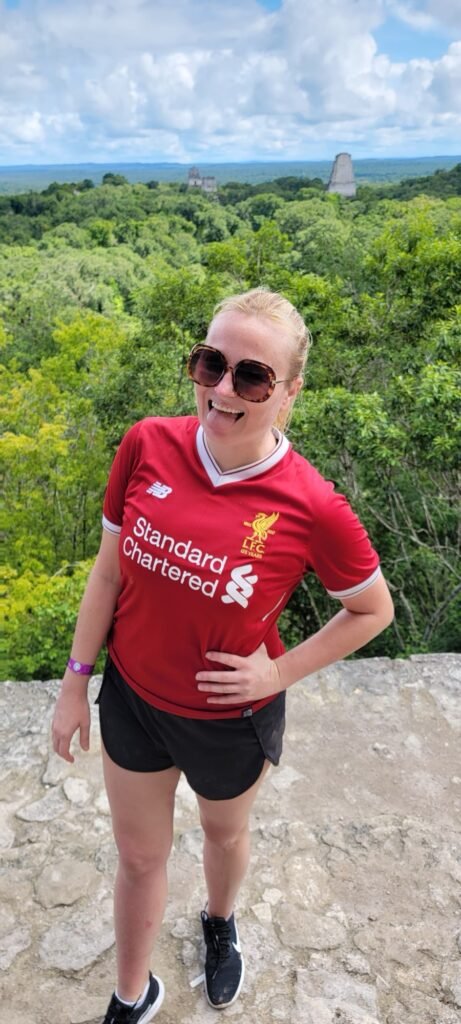
Temple IV is particularly famous because it rises approximately 70 meters above the ground and provides an incredible view over the rainforest canopy. From the top, you can see the tops of other Maya temples emerging from the jungle.
There are three structures visitors can climb at Tikal. If you’re able to, I recommend climbing all of them. The views over the jungle are incredible!
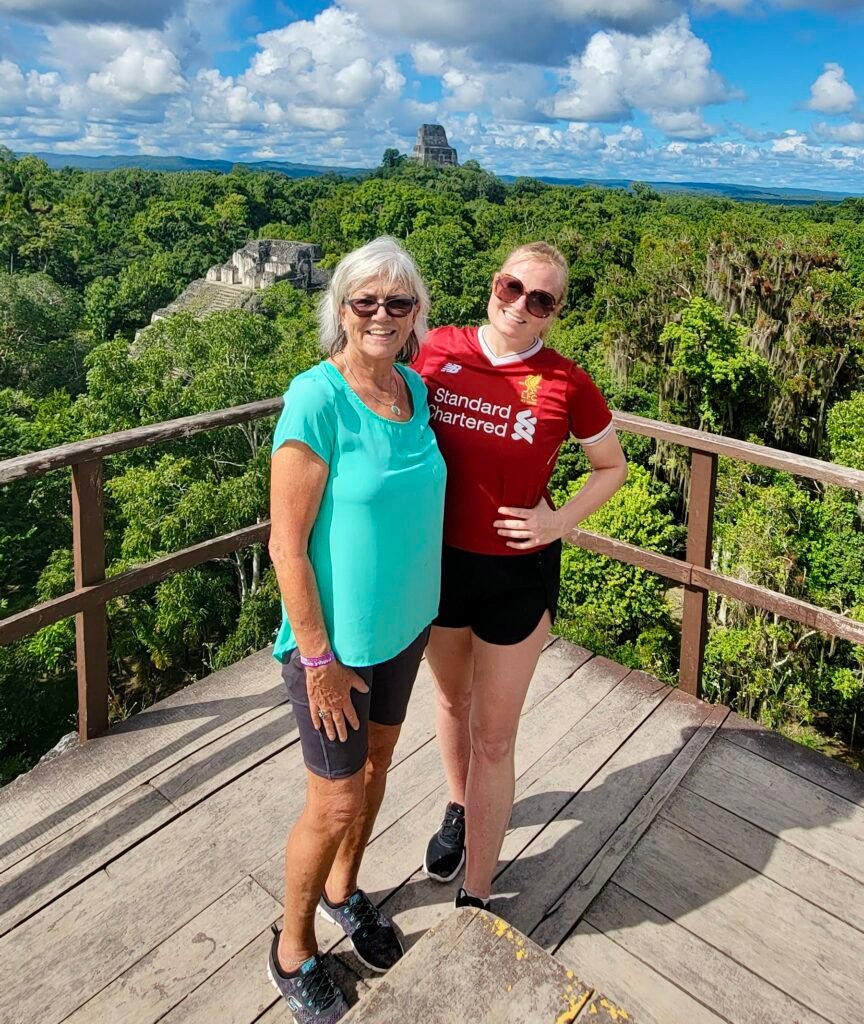
My tips for visiting Tikal
If you’re visiting Tikal for the first time, these are the things I’d keep in mind:
Go early. The temperature is generally more comfortable, and you’ll have a better chance of seeing wildlife. If it’s cloudy, then it won’t be so hot, and it’s fine to explore at any time of the day. However, on a hot and sunny afternoon, some people might struggle greatly with the weather.
Wear comfortable shoes. This is not a quick walk around a small archaeological site.
Bring water. You’ll be outside for hours.
Don’t rush. Tikal is enormous, and part of its magic is simply walking through the jungle between the ruins.
Consider hiring a guide. The historical context makes the experience much more meaningful.
Don’t climb structures unless it is specifically permitted. Park regulations are designed to protect the archaeological remains, and visitors are instructed not to climb restricted areas or damage the structures.
And finally, don’t think of Tikal as just a collection of Maya temples. You’re visiting an ancient city surrounded by one of Guatemala’s most important tropical ecosystems.
That combination of ancient Maya civilization + rainforest + wildlife is what makes Tikal one of the most unforgettable places to visit in Guatemala.
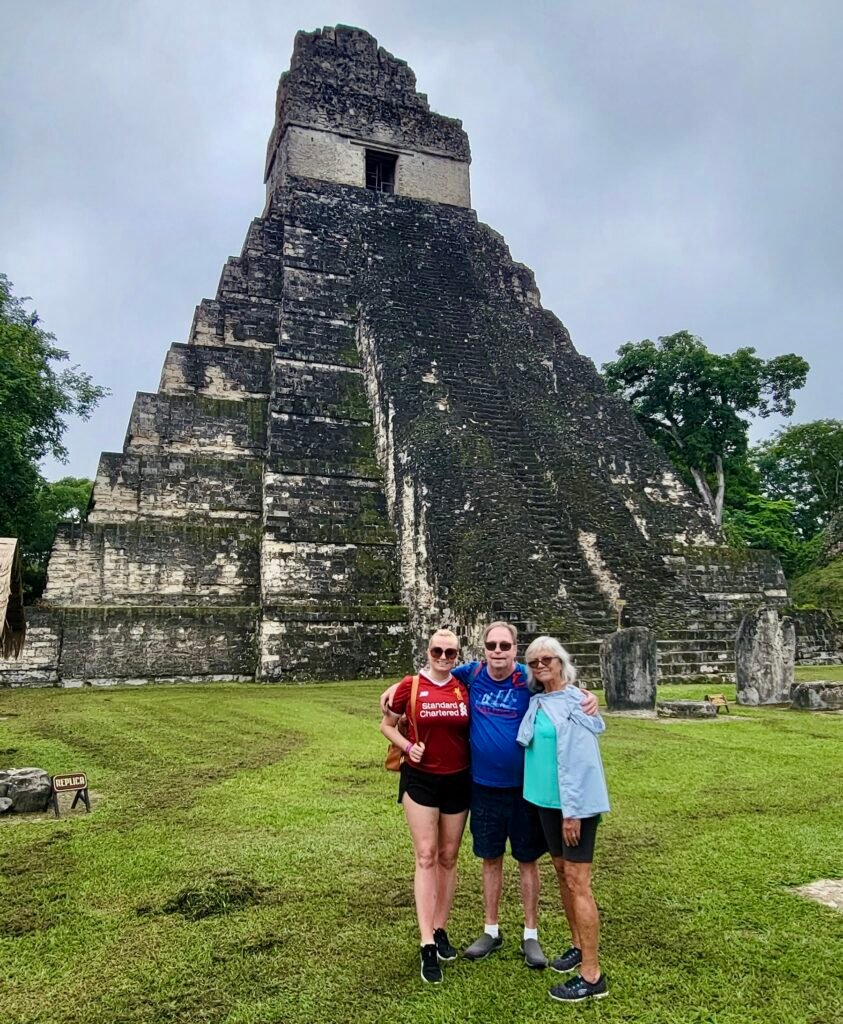
Hotels in Tikal
Most tourists stay in Flores or El Remate because there are numerous hotels available and it’s very convenient. However, there are two hotels within Tikal National Park which can be convenient for a sunrise or sunset tour. Moreover, you’re very likely to hear and see wildlife at these hotels since they are literally located within the jungle.
The hotels within the national park are within walking distance of the ticket check-in point. If you decide to stay in Flores, then you should know that it takes approximately 1 hour and 20 minutes to drive to Tikal from the town.
🛌 Jungle Lodge Tikal: This is a historical hotel that was built initially for the archaeologists. I’ve stayed here three times and had a great experience. It takes 5 minutes to walk to the ticket check-in office, and there is a swimming pool as well as an on-site restaurant.
One thing to note is that they do not have electricity or air conditioning because this is in the national park and away from the towns. The hotel runs on a generator for several hours per day. They have the generator on in the morning and toward the end of the day, but it will be shut off at approximately 10 pm or 11 pm every night. Despite this, I’ve never felt too hot staying here. They have fans and mosquito nets in the rooms. If you prefer to stay in a hotel with air conditioning, then I recommend El Remate or Flores. Click here to review details about Jungle Lodge Tikal and to book a room.
🛌 Hotel Jaguar Tikal Inn: I have not stayed at this hotel. However, I am under the impression that it’s very similar to Jungle Lodge Hotel. The reviews are good, but the Jungle Lodge Hotel has slightly better reviews, which is why I’ve always stayed there. I think this is a good option if you want to stay close to the national park and the Jungle Lodge Hotel is sold out. If you prefer to stay in a hotel with air conditioning, then I recommend staying in El Remate or Flores. Click here to review details about Hotel Jaguar Tikal Inn and to book a room.
Restaurants in Tikal
🍽️ Tikal Park Restaurant: This restaurant is near the visitor’s entrance and serves breakfast and lunch. The food is very good here!
🍽️ Comedor Imperio Maya: This is a budget-friendly hotel located at the front entrance and near the camping area.
🍽️ Restaurant at Jungle Lodge Hotel: I’ve eaten here a few times, and the food is decent but a bit pricey. I would choose the Tikal Park Restaurant over this unless you’re staying at the hotel.
🍽️. Jungle Lodge Hotel Restaurant: I have not eaten here, but I thought I would mention it in case the park is very busy and you need additional options. Maybe the restaurant is very good, but I don’t know.
Activities + Tours in Tikal
✅ Tikal shared all-inclusive group tour: This is one of the most highly rated full-day tours to Tikal, and it includes everything! It includes hotel pickup, a local guide, lunch, and the park entrance fee. Click here to review the details and book.
✅ Tikal VIP all-inclusive private tour: This full-day tour includes transportation from your hotel, lunch, a guide, and an entrance fee. Click here to review the details and book.
✅ Tikal and Yaxha exclusive private tour: This full-day tour includes transportation, lunch, a guide, and a visit to both national parks! This is the best tour to see as much as possible in one day. Click here to review the details and book.
✅ Full-day shared sunrise Tikal tour: This tour includes transportation and a guide. Lunch and park tickets are paid separately. This is a great way to see Tikal before the crowds and heat arrive, and you’ll get to watch the sunrise over the jungle while listening to howler monkeys! Click here to review the details and book.
✅ Tikal private all-inclusive sunrise tour: This tour includes transportation, a guide, breakfast at a local restaurant, and the entrance tickets. This is the best way to watch the sunrise over the jungle while sitting at the top of one of the highest structures at Tikal. You’ll likely hear howler monkeys! Click here to review the details and book.
✅ Tikal sunset shared group tour: This tour leaves at noon instead of early since it ends while watching the sunset. You’ll visit several of the most important structures at Tikal with other travelers. The tour includes transportation and a guide, but you’ll need to buy an entrance ticket (150 Quetzales) plus the extra fee to watch the sunset (100 Quetzales). Click here to review the details and book.
✅ Tikal trip by air from Guatemala City: If you’re traveling in Guatemala and only have one day to explore Tikal, then I suggest booking this tour! The experience includes a round-trip flight leaving early from Guatemala City and returning late afternoon or evening. It also includes a travel guide, transportation in Guatemala City and Petén, and lunch. Keep in mind that this is a long day! Click here to review the details and book.
✅ Tikal private tour from San Ignacio, Belize with lunch: This experience includes private transportation, a guide, the Tikal entrance fee, lunch, and assistance crossing the border. Keep in mind that this is a long day! Click here to review the details and book.
✅ Tikal and Yaxhá Exclusive Private Day Trip: This is an all-day tour to visit both ancient sites. You’ll leave early in the morning from Flores, El Remate, or the Mundo Maya airport and visit Tikal first, then Yaxhá. The tour includes private transportation, lunch, and a guide. Click here to review the details and book.
✅ Tikal and Yaxhá overnight trip by air from Guatemala City: This is a 2-day trip that includes breakfast, overnight accommodation, a guide, transportation, admission fees for both Tikal and Yaxhá, a round-trip flight from Guatemala City to Flores, and lunch. On the first day, you’ll leave Guatemala City early, arrive in Flores, spend the day exploring Tikal, then check into your hotel and relax. On day 2, you’ll explore Yaxhá, then take a flight back to Guatemala City. Click here to review the details and book.
Yaxhá National Park
If you have the time to visit only one Maya archaeological site in Petén, Tikal is probably the obvious choice. But if you have time for a second site, I highly recommend adding Yaxhá to your itinerary.
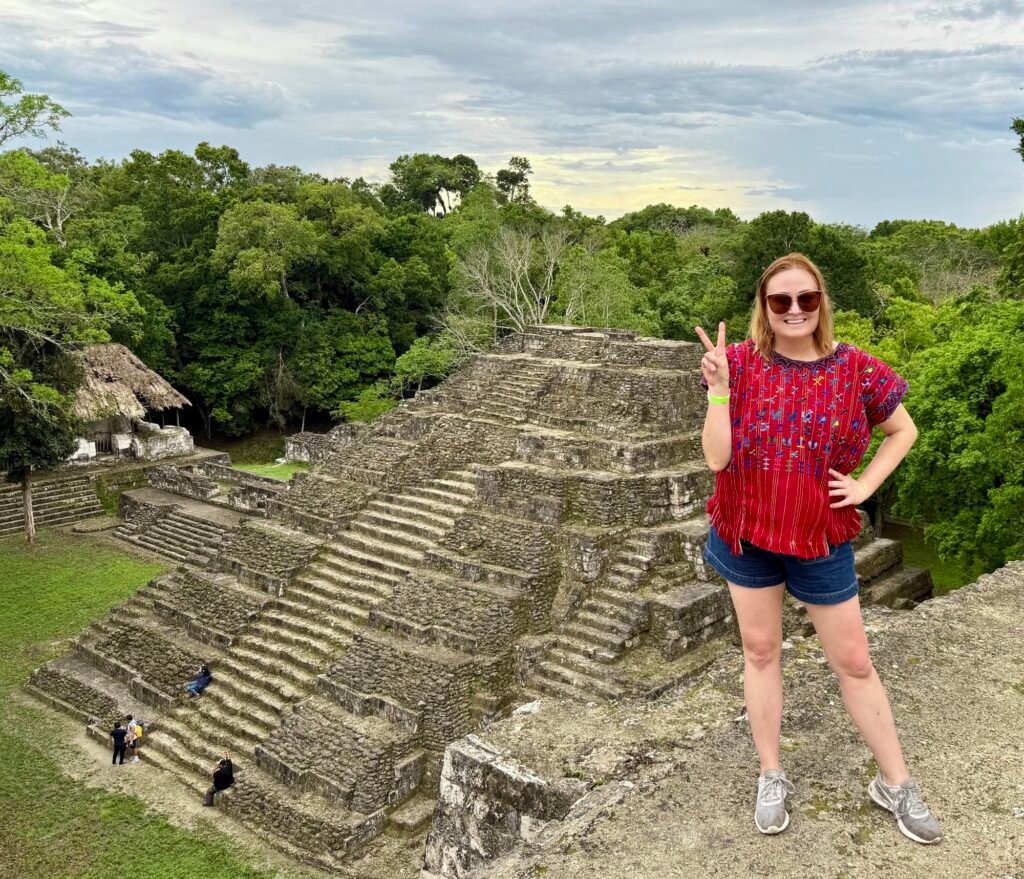
Yaxhá is an ancient Maya city located within the Yaxhá-Nakum-Naranjo National Park, approximately 1 hour and 15 minutes from Flores. The park covers about 37,160 hectares and protects an unusual combination of archaeological sites, tropical forest, lakes and wetlands.
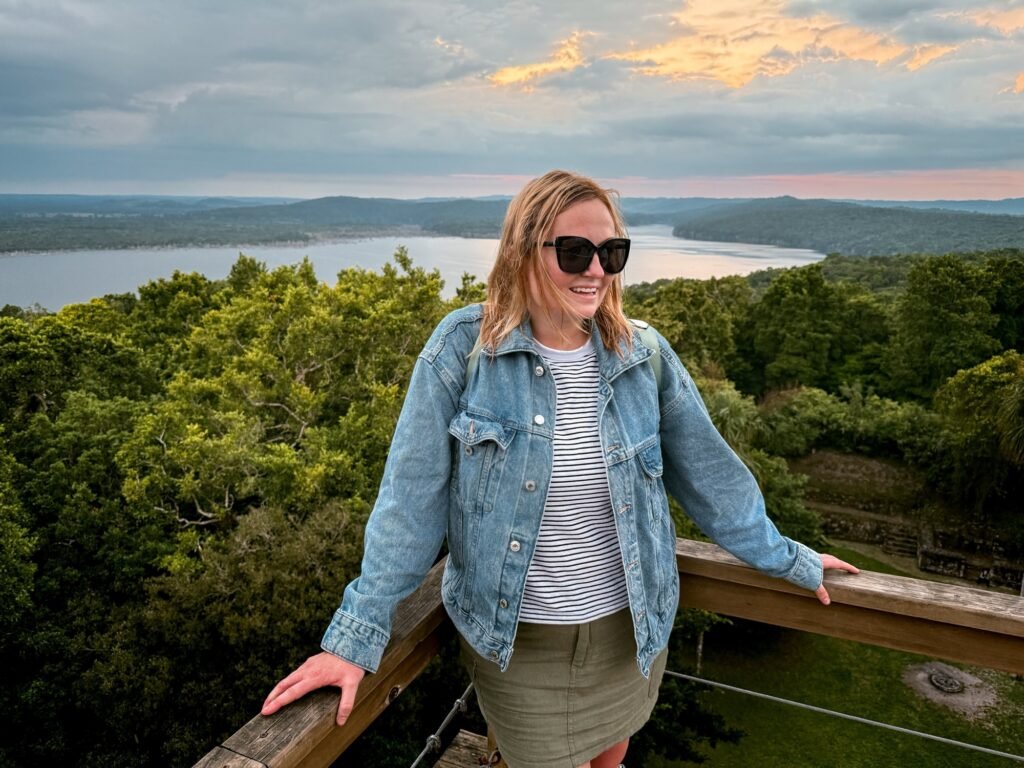
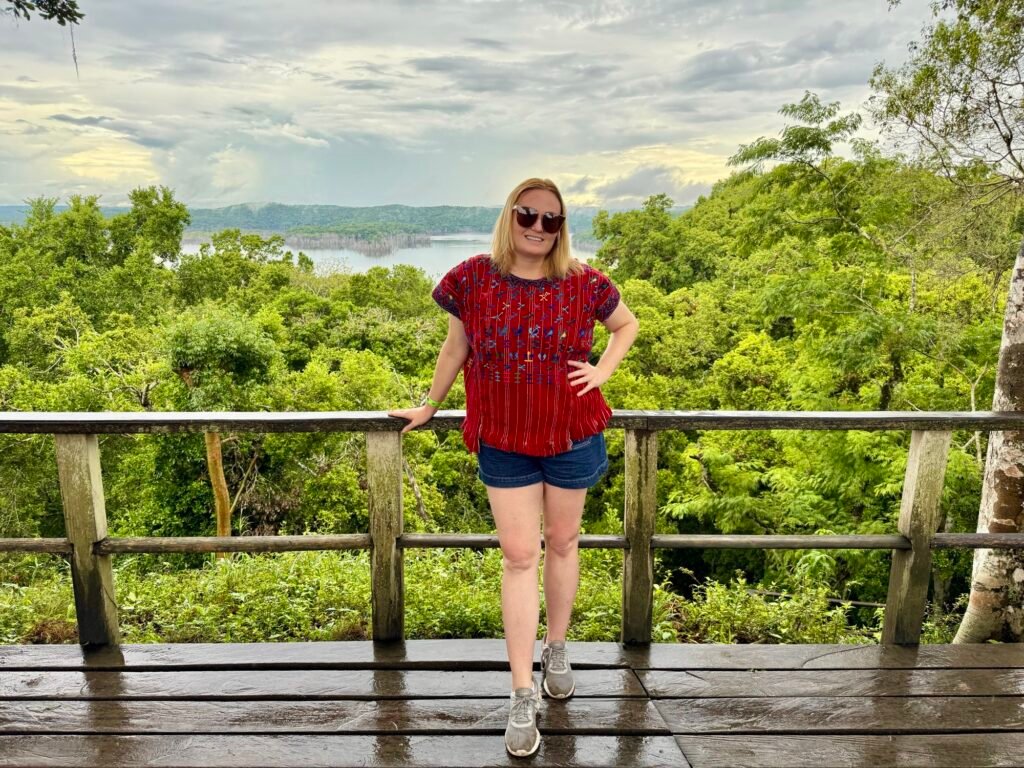
One of the things that makes Yaxhá so special is its setting. The ancient city sits between Lake Yaxhá and Lake Sacnab, and several of the archaeological structures provide beautiful views over the surrounding water and forest. The park is also recognized as a wetland of international importance, making this much more than an archaeological destination.
If you have already visited Tikal, you might wonder whether Yaxhá is worth adding to your itinerary. I think it is!
Yaxhá is considerably smaller and generally feels more peaceful than Tikal. Instead of spending the day surrounded by large groups of tourists, you can walk through the rainforest and ancient plazas with a much greater sense of solitude.
While Tikal is famous for its enormous temples and spectacular views from Temple IV, Yaxhá has something Tikal doesn’t: its relationship with the surrounding lakes is an integral part of the experience.
You can climb several structures and look out over the forest and Lake Yaxhá, creating some incredible views.
What to see at Yaxhá
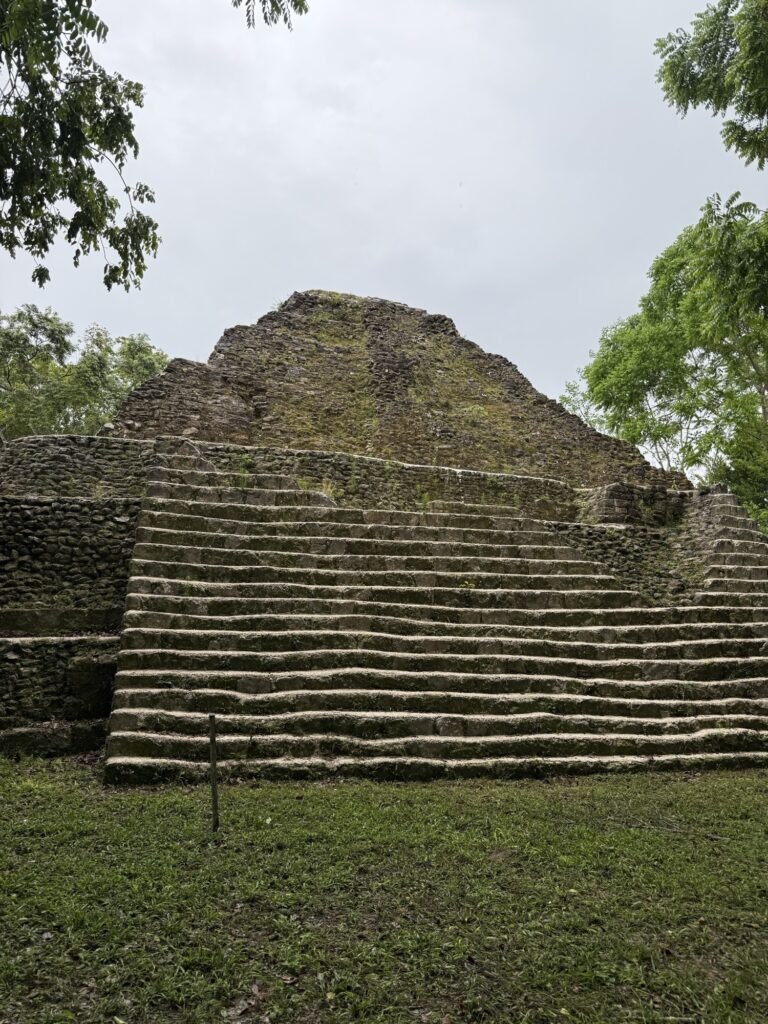
One of the highlights of visiting Yaxhá is Temple 216, one of the tallest structures at the site.
Climbing to the top gives you an incredible panoramic view over the surrounding rainforest and Lake Yaxhá. This is also one of the reasons Yaxhá is particularly popular for sunset tours.
Watching the sun go down over the lake and jungle from an ancient Maya structure is a pretty unforgettable experience.
Yaxhá is also a great place to experience the wildlife of Petén.
Because the archaeological site is surrounded by protected rainforest and wetlands, you may encounter howler monkeys, spider monkeys, birds, coatis, and other wildlife during your visit.
Hotels
Most tourists stay at a hotel in Flores (1 hour and 20 minutes away) or El Remate (55 minutes away), and I have these options listed under those destinations. However, there is one very basic but highly rated hotel located just outside of the main entrance.
🛌 El Sombrero Ecolodge: This is a rustic jungle lodge located just along the lagoon. It offers simple thatched-roof bungalows and an on-site restaurant with complimentary breakfast. Click here to review more information and to book a room.
Restaurants
🍽️ Yaxhá park restaurant: There is a fantastic restaurant located at the entrance near the ticket counter. The restaurant is overlooking the lake and serves delicious local cuisine and international options.
🛌 El Sombrero Ecolodge: The hotel I mentioned above has a restaurant which is not far from the front entrance.
Activities + Tours
✅ Yaxhá archaeological focus day tour with monkeys: This is a highly rated tour including a guide, transportation, lunch, and water refill. They can pick up at multiple locations in Petén or Belize. Click here to review information about the tour and to book.
✅ Private Yaxhá archaeological sunset tour: This is a highly rated tour that starts at approximately 12:30 pm. You’ll stop to have lunch, then explore the different temples and structures at Yaxhá with a guide. Finally, you’ll watch the sunset from the tallest temple. Click here to review the details and to book.
✅ Yaxhá and Topoxte Jungle Trek: This is a very unique tour for Yaxhá and an incredible experience including a boat ride, a jungle trek, and exploring the ancient structures. It’s a full-day (lengthy) tour including transportation, 2 guides, a boat, snacks, and water. Moderate physical ability is recommended for this experience. Click here to review the details about the tour and to book.
✅ Yaxhá VIP all-inclusive private tour from Flores: This tour includes transportation, a guide, a flexible departure time, lunch, and the entrance ticket. You’ll spend a full day exploring the historical Maya city. Click here to review the details and to book.
✅ Tikal and Yaxhá Exclusive Private Day Trip: This is an all-day tour to visit both ancient sites. You’ll leave early in the morning from Flores, El Remate, or the Mundo Maya airport and visit Tikal first, then Yaxhá. The tour includes private transportation, lunch, and a guide. Click here to review the details and to book.
✅ Tikal and Yaxhá overnight trip by air from Guatemala City: This is a 2-day trip that includes breakfast, overnight accommodation, a guide, transportation, admission fees for both Tikal and Yaxhá, round-trip flight from Guatemala City to Flores, and lunch. On the first day, you’ll leave Guatemala City early, arrive in Flores, spend the day exploring Tikal, then check into your hotel and relax. On day 2, you’ll explore Yaxhá, then take a flight back to Guatemala City. Click here to review the details and to book.
El Mirador
Deep in the rainforest of northern Petén lies El Mirador, one of the most remarkable and remote archaeological sites in Guatemala. We came here once, and the entire experience felt like a National Geographic expedition.
Getting there is part of what makes El Mirador so special. Unlike Tikal and Yaxhá, you can’t simply drive up to the entrance and spend a few hours exploring. El Mirador is located deep within the Maya Biosphere Reserve, and reaching it requires either a multi-day trek through the jungle or a helicopter flight.
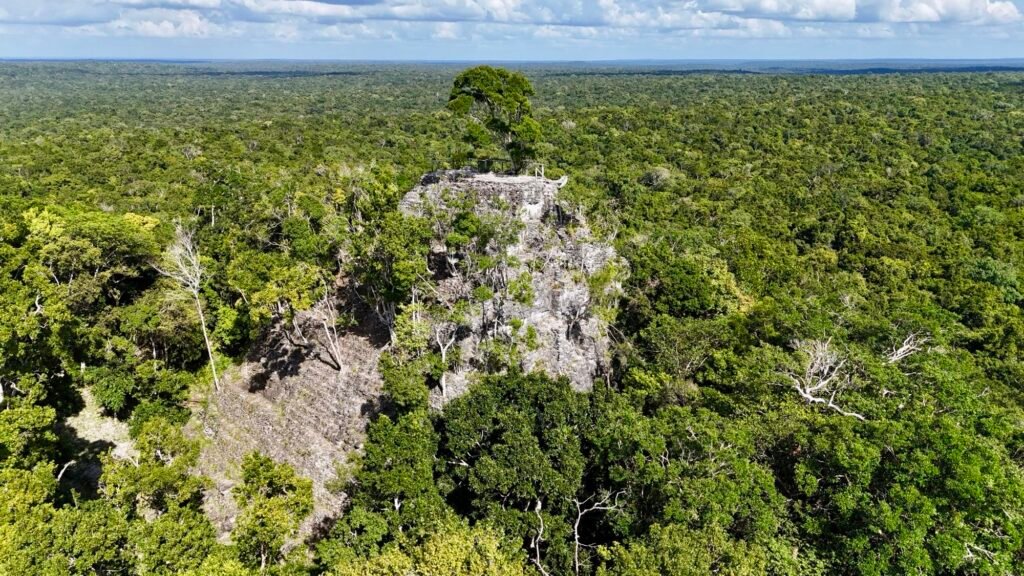
El Mirador is one of the most remote and isolated destinations in Guatemala. Something to note is that it’s not possible to visit without a guided tour, which needs to be arranged in advance. If you visit, you likely won’t see anyone else there except your group and possibly some archaeologists. This remoteness is part of the appeal.
El Mirador is older than Tikal, far less developed for tourism, and La Danta is one of the largest pyramids in the world. There’s something incredibly powerful about standing at La Danta, one of the most ancient sites in the world, and traveling deep into the jungle to get there. Our visit to El Mirador was truly one of the most incredible experiences I’ve had to date in Guatemala, and if you have the time, I highly recommend adding this to your itinerary.
Hiking to El Mirador
For adventurous travelers, the traditional way to reach El Mirador is by hiking from the community of Carmelita.
The organized trek offered through the Carmelita-El Mirador tourism cooperative takes five days and four nights and includes several archaeological sites along the route, including El Tintal, La Muerta, and El Mirador. The itinerary involves approximately 5–6 hours of walking per day.
The trek takes you deep into the tropical forest and follows ancient Maya roads known as sacbeob. These elevated roads were constructed by the Maya and connected cities throughout the region. One section of the ancient road encountered on the trek is approximately 23 kilometers long.
The hiking experience isn’t simply a way to get to El Mirador. The journey itself is part of the attraction.
You’ll spend several nights camping in the jungle, travel with local guides and muleteers, and have the opportunity to experience the rainforest in a way that you simply can’t from a helicopter.
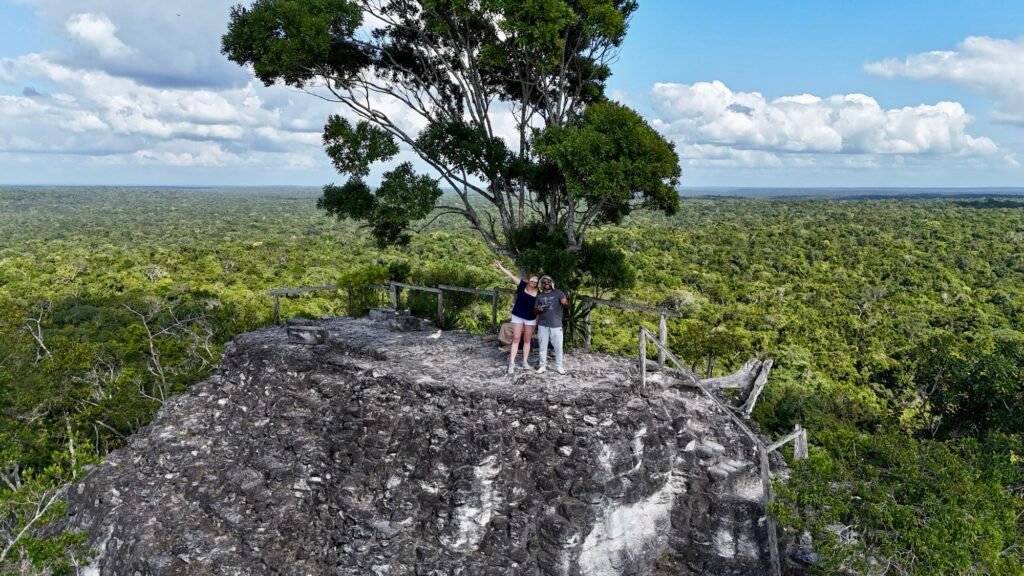
The organized trek includes transportation between Flores and Carmelita, meals, purified water and camping equipment, although exact inclusions can vary by operator.
As I mentioned, I have not done this hike myself, but from what I’ve heard and read online, I would consider this an adventure expedition rather than a casual hike. Although the trail is not known for being extremely mountainous—the route is relatively flat—the biggest challenge is the distance, heat, humidity, and number of consecutive days spent walking.
This hike will take you traveling through tropical rainforest for hours at a time, carrying your personal belongings and spending multiple nights away from normal tourist infrastructure.
Visiting El Mirador by Helicopter
This is the option we chose. We booked our helicopter tour with Maya Jets, and we had a very good experience. Instead of spending several days traveling through the jungle, the helicopter took us on a one-day round trip from the city of Flores, flying above the jungle and to the historical city.
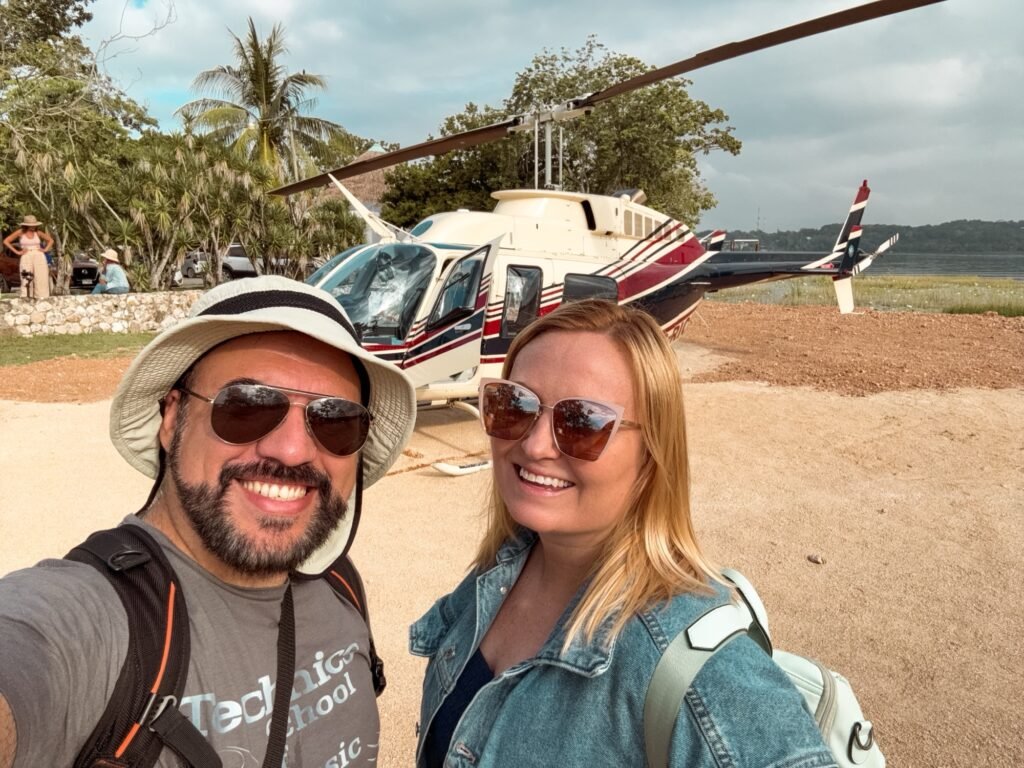
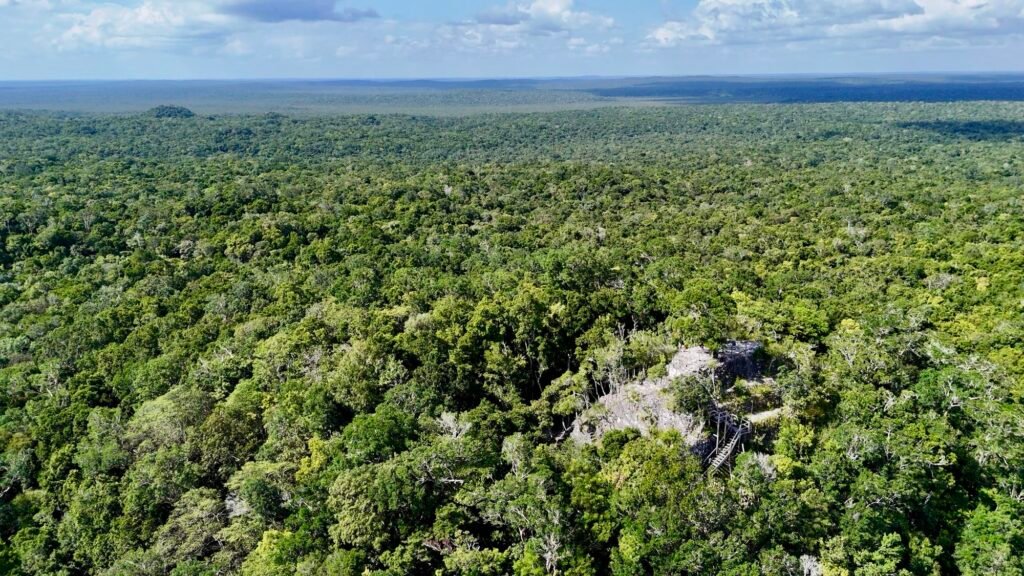
The flight itself was one of my favorite parts of the experience. It takes approximately 40 minutes one way, and we had incredible views over the island of Flores, the lake, and then what seems to be an endless expanse of jungle. At the end of the flight, we started to see the archaeological remains emerging from the jungle.
Once the helicopter arrived at El Mirador, it circled around the largest pyramid called La Danta, then landed nearby. We walked past the camp where the archaeologists stay and learned that there are no roads leading to El Mirador, as well as no electricity, stores, restaurants, etc. Only a rustic camp, and no one has cell phone service in this part of Guatemala.
Our guide walked us through several ancient structures, and we were able to climb on top of two of them, including La Danta, one of the largest pyramids in the world. At the top of La Danta, we ate our packed lunch and enjoyed incredible views over the jungle canopy. The guide explained to us that we could see the border with Mexico from where we were standing at the top of the pyramid.
Seeing El Mirador from above gives you a completely different perspective on just how remote this ancient city is.
Hotels
There are no hotels in this part of Guatemala. Therefore, I recommend staying at one of the hotels I have listed for Flores. Especially since the tour agencies operate from Flores.
Restaurants
Once again, there are no restaurants in El Mirador. Your tour operator will bring food for your experience, and they cater to special diets.
Tours
✅ 5-day trek to El Mirador from Flores – all-inclusive camping tour: This is the hiking experience I’ve mentioned above. Remember that it is not an easy trek, as the jungle is very hot and humid. One of the biggest benefits of booking this tour is that you will be supporting the local community called El Carmelita. They manage these experiences and receive the profits from tourists.
The tour includes transportation from Flores to El Carmelita, a local guide, mules to carry the tents and food, men who handle the mules, cooks, camping equipment, purified water, lunch for 5 days, dinner for 4 days, and breakfast for 4 days. Click here to review the details and to book the tour.
✅ Helicopter tour El Mirador La Danta from Flores: This is the experience I’ve mentioned above, which includes the guide, round-trip helicopter flight, and bottled water. This is a full-day tour, and the guide we had was amazing! He was studying to be an archaeologist and was very knowledgeable. Click here to review the details and to book the tour.
El Remate
El Remate is on this list because many tourists stay here and it’s a peaceful alternative to staying in Flores. Flores is not an overall busy place, but it’s even quieter here as El Remate is a small lakeside community.
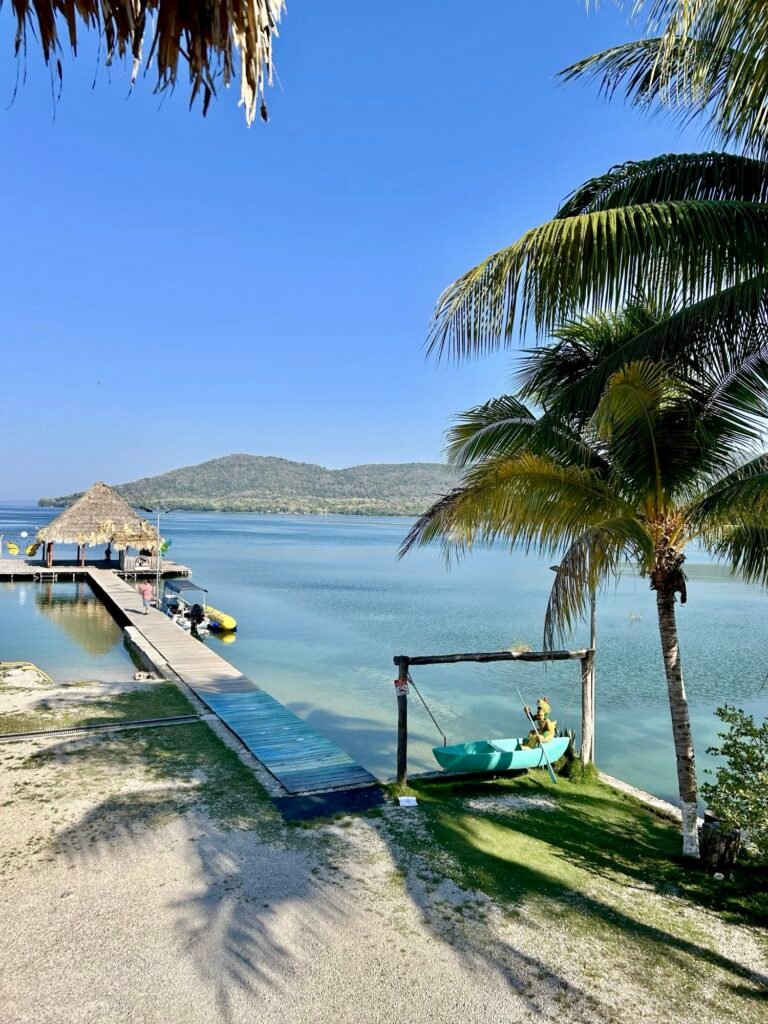
El Remate is a very convenient place for tourists to stay because it sits along the road between Flores and Tikal. It’s surrounded by nature and directly connected to Lake Petén Itza. Instead of staying in a busy tourist center, you can wake up beside the lake, spend the day swimming, and watch the sunset from the shore.
Something to note is that it takes approximately 40 minutes to get to Tikal National Park from El Remate, one hour to Yaxhá, one hour and 15 minutes to Uaxactún, 40 minutes to Flores, and 2 hours and 25 minutes to Crater Azul.
Why stay in El Remate instead of Flores?
Flores is a great choice if you want lots of restaurants, nightlife, tour operators, and easy access to transportation. But El Remate has a much more relaxed atmosphere.
The village is small and walkable, with accommodations and restaurants scattered along the lake and the road toward Tikal. There are also several hotels where you can stay directly on the lake and there are a few tour operators located in the town.
Staying here also puts you closer to Tikal than staying in Flores, which can be convenient if you want to get an early start at the archaeological site.
But I wouldn’t recommend El Remate simply because it’s a convenient place to sleep before visiting Tikal. It’s worth staying for the experience itself.
Hotels in El Remate
🛌 Hotel Gringo Perdido: This is the most popular hotel in the area. It’s a mid-range priced hotel with s a private beachfront area and access. There is an outdoor swimming pool, rooms with air conditioning, and an on-site restaurant. Click here to review more details and to book.
🛌 Camino Real Tikal: This is one of the nicest hotels in the area. There is an outdoor pool, temazcal, and outdoor sauna. The hotel has a restaurant with amazing lakeside views, a poolside bar, rooms with air conditioning, and direct beach access. Click here to review more details and to book.
🛌 Sun Breeze Hotel: This is a budget-friendly hotel with direct, beachfront access, an on-site restaurant, and rooms with air conditioning. Click here to review more details and to book.
Restaurants in El Remate
🍽️ Mayan Roots 502: This is a highly rated restaurant with live music at times and the food is delicious. It’s a must-visit if you’re staying in El Remate or stopping here on the way to and from Tikal.
🍽️ Restaurante Y Pizza Napoles: This is the restaurant to visit if you’re craving pizza! It’s highly rated, and the food is delicious.
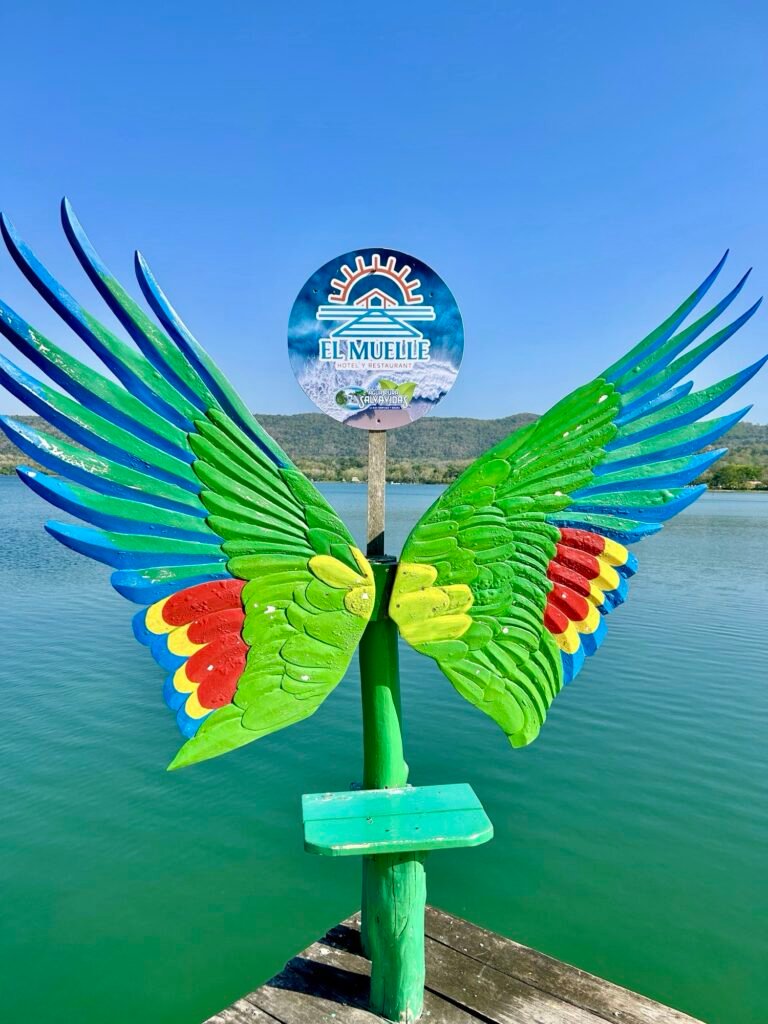
🛌 El Muelle Hotel Y Restaurante: This is not a highly rated hotel but the restaurant is great! There are nice views of the lake from the restaurant and a dock.
Tours in El Remate
The tours listed above for Yaxhá and Tikal will arrange for pickup in El Remate. You can double-check the tour booking site to make sure. If you’re staying at the Camino Real Hotel, you can book this tour, which will pick you up directly at the hotel.
You can also book tours to Crater Azul from El Remate. You’ll find these listed below.
Uaxactún
If you want to experience a Maya archaeological site that feels far more remote and off the beaten path than Tikal, add Uaxactún to your Petén itinerary.
Located approximately 23 kilometers north of Tikal, Uaxactún is an ancient Maya city surrounded by the rainforest of the Maya Biosphere Reserve. But Uaxactún isn’t only an archaeological site. A modern community has existed here for more than a century, and the people who live here have developed a unique relationship with the surrounding forest.
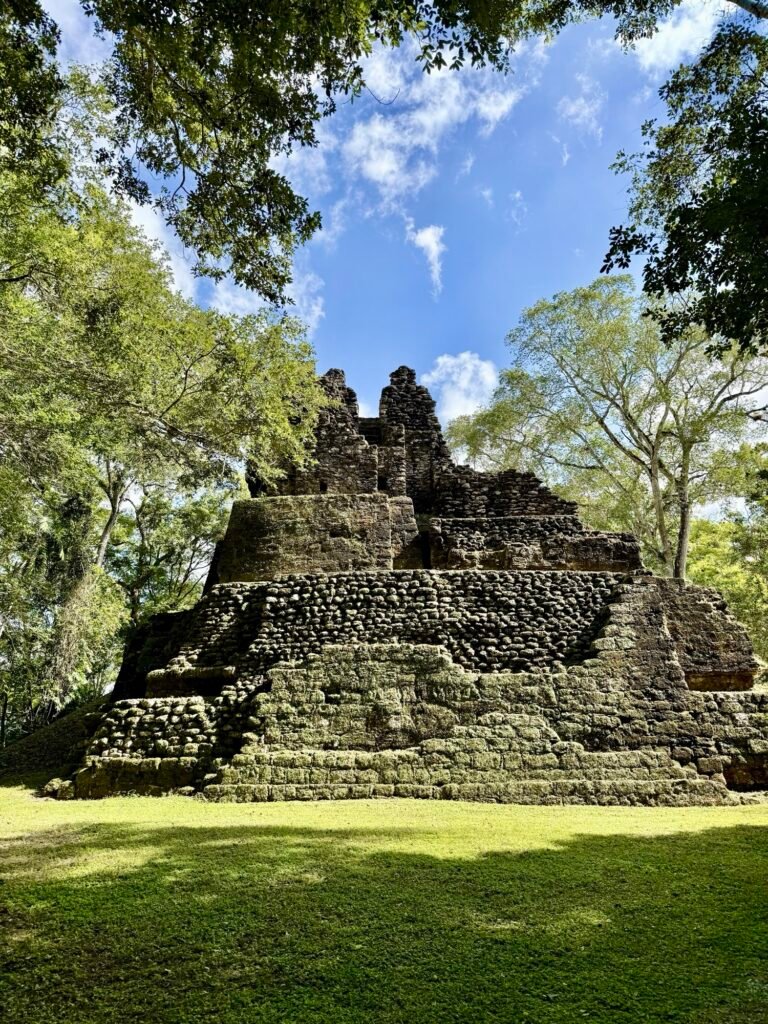
That combination of archaeology, rainforest and community-based tourism is what makes Uaxactún particularly interesting.
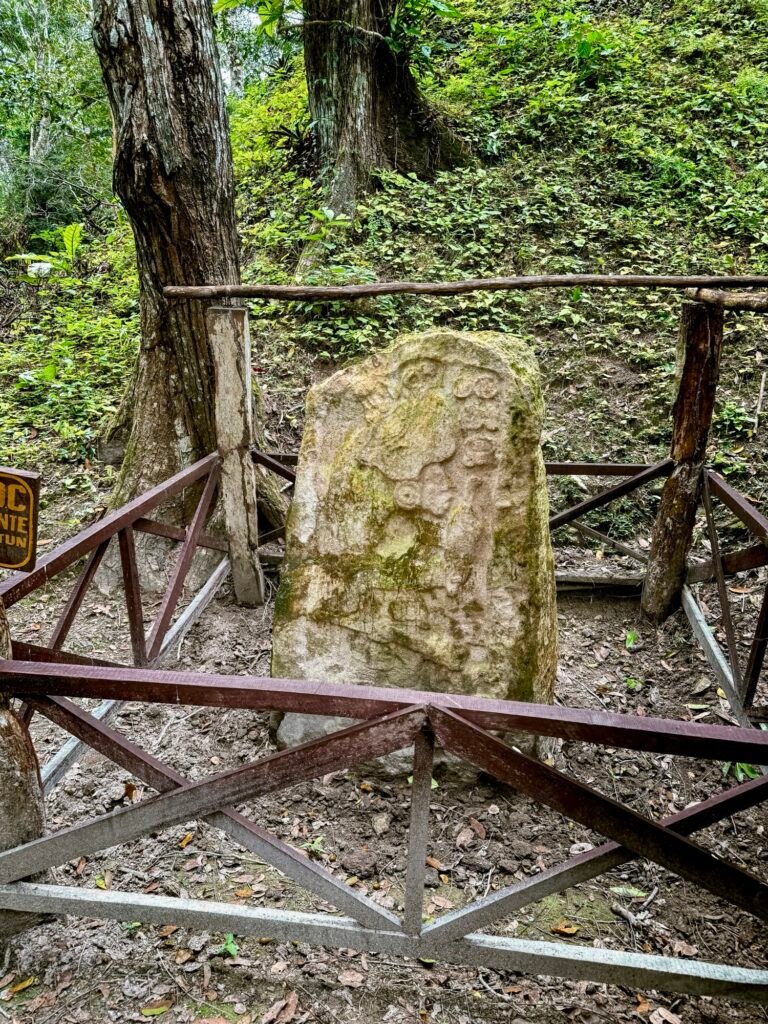
The site is famous for its Group E astronomical complex, which is one of the most important features to see when visiting. Uaxactún’s archaeological research began in the early 20th century, and the site is considered an important location in the study of Maya astronomy
What makes the site especially interesting is that you’re not simply walking through restored temples. You’re visiting an archaeological site within a living community.
Is it worth visiting Uaxactún?
I think Uaxactún is absolutely worth visiting if you have extra time in Petén. However, I wouldn’t recommend it to someone who only has two days in the region. If you have limited time, prioritize Tikal and Yaxhá.
We went to Uaxactún and enjoyed it because it’s very remote and we didn’t see any other tourists there. However, I find Tikal and Yaxhá to be overall much more impressive. I think anyone highly interested in ancient Maya sites will enjoy a visit here since it’s very accessible from where most tourists stay.
Hotels
This is a very remote area of Petén without many facilities. Tourists usually stay at the hotels near Tikal, El Remate, or Flores.
Restaurants
🍽️ Restaurante Uaxactún: This is the best option near the ancient city.
Tours
✅ Tour to Uaxactún: This experience includes round-trip transportation and a guide. There is an all-inclusive option with lunch and park tickets. Click here to review the details and to book.
Nuevo Horizonte
Nuevo Horizonte is a community in Santa Ana, Petén, that offers a very different experience from the region’s famous archaeological sites. The community was established in 1998, following the signing of Guatemala’s Peace Accords, by former members of the Rebel Armed Forces (FAR) who had been involved in Guatemala’s 36-year internal armed conflict. The founders came together to build a new life based on community organization, cooperation, and self-sufficiency.
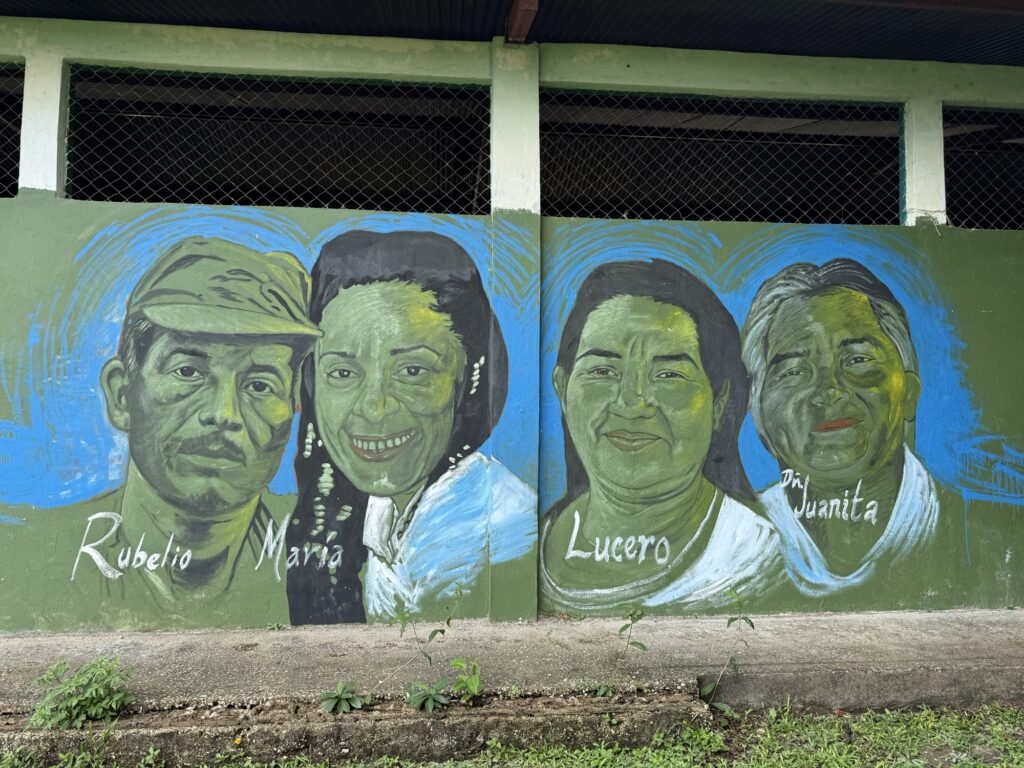
Today, Nuevo Horizonte operates as a cooperative and has developed a unique form of community-based tourism. Visiting the community provides travelers an opportunity to learn about Guatemala’s recent history directly from the people who experienced it, while also seeing how the community has developed over the decades.
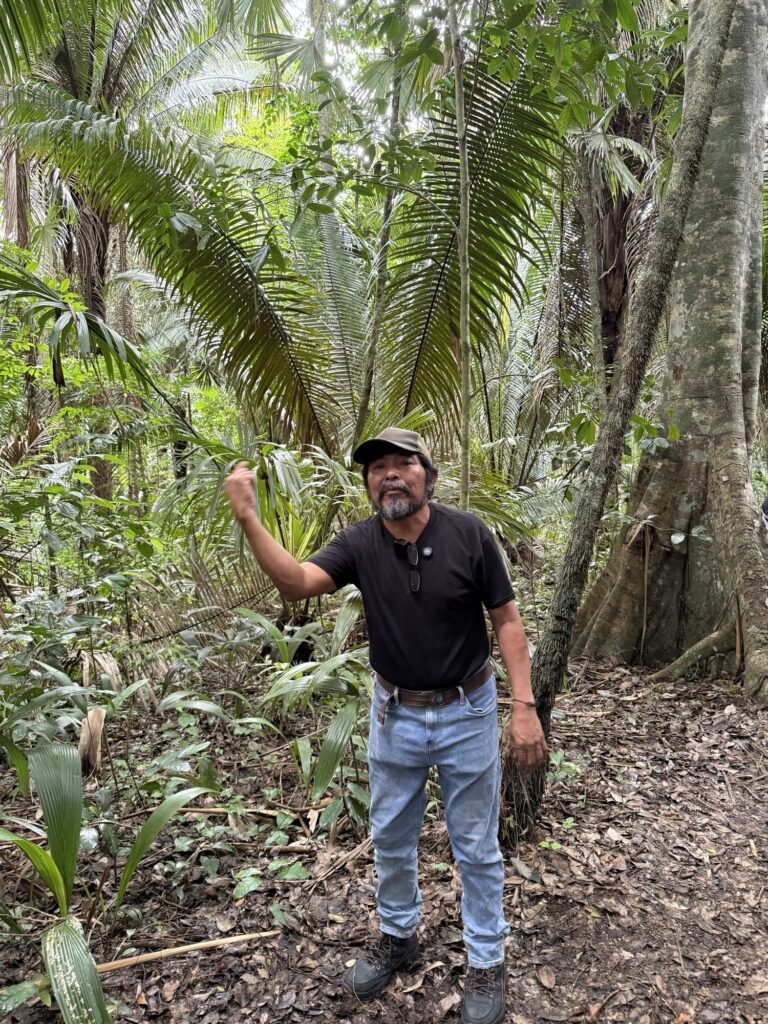
During my visit, I took a day trip tour of Nuevo Horizonte, and it was one of the more unusual experiences I had in Petén. Rather than simply visiting a tourist attraction, the tour gave me a glimpse into the history, daily life, and projects of the community.
When I visited the community, they provided us with an overview of their lives during the civil war and showed us how they camped in the jungle. They shared the community’s political beliefs, took us through a museum and an area with many murals. They also explained to us how they formed their community post-war and their most recent projects.
If you’re interested in understanding Guatemala beyond its ancient Maya civilization, I highly recommend adding Nuevo Horizonte to your Petén itinerary. It provides a perspective on a much more recent chapter of Guatemala’s history while showing how a community emerged from the country’s conflict and worked collectively to build a new future.
Something to note is that it takes approximately 40 minutes to arrive at Nuevo Horizonte from Flores, almost 2 hours to Crater Azul, one hour and 40 minutes to Tikal, one hour and 40 minutes to Yaxhá, and 50 minutes to El Remate.
If you want to visit, I recommend contacting Nuevo Horizonte directly. They will provide transportation from where you are staying and set up a guide in advance. Their phone number is +502 4476 5347, and their email address is turismohorizonte@gmail.com.
Hotels
Most tourists stay in the town of Flores or in El Remate. However, the Nuevo Horizonte community does have very basic accommodation. I stayed there for one night, and it wasn’t the most comfortable (since there’s no air conditioning and I had a shared bathroom). However, it’s a great option for a budget traveler or someone who wants a cultural immersion experience. There is a restaurant where they also serve budget-friendly meals. You can contact them for their current rates and availability.
Restaurants
There is a restaurant on-site in the community. This is where they provide some demonstrations with information. The food was basic but very good!
Tours + Activities
Once again, I would contact the community directly to set up a guide and transportation.
Crater Azul
If you’re looking for something completely different from the archaeological sites of Tikal, Yaxhá and Uaxactún, Cráter Azul is one of the most beautiful natural attractions you can visit in Petén.
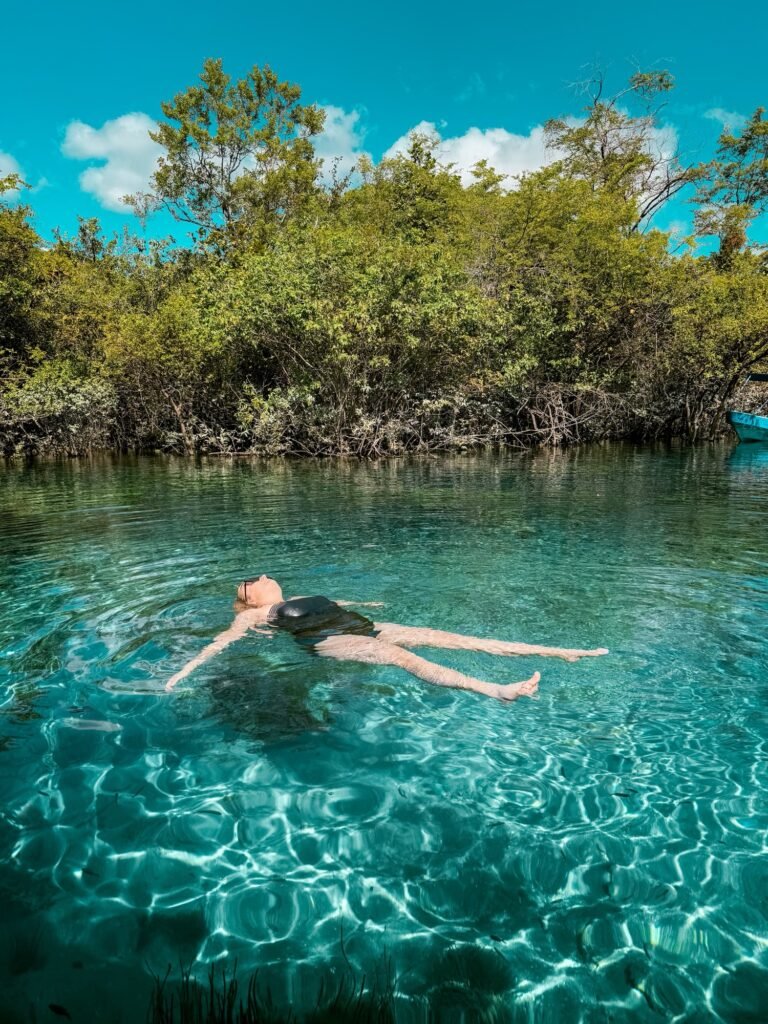
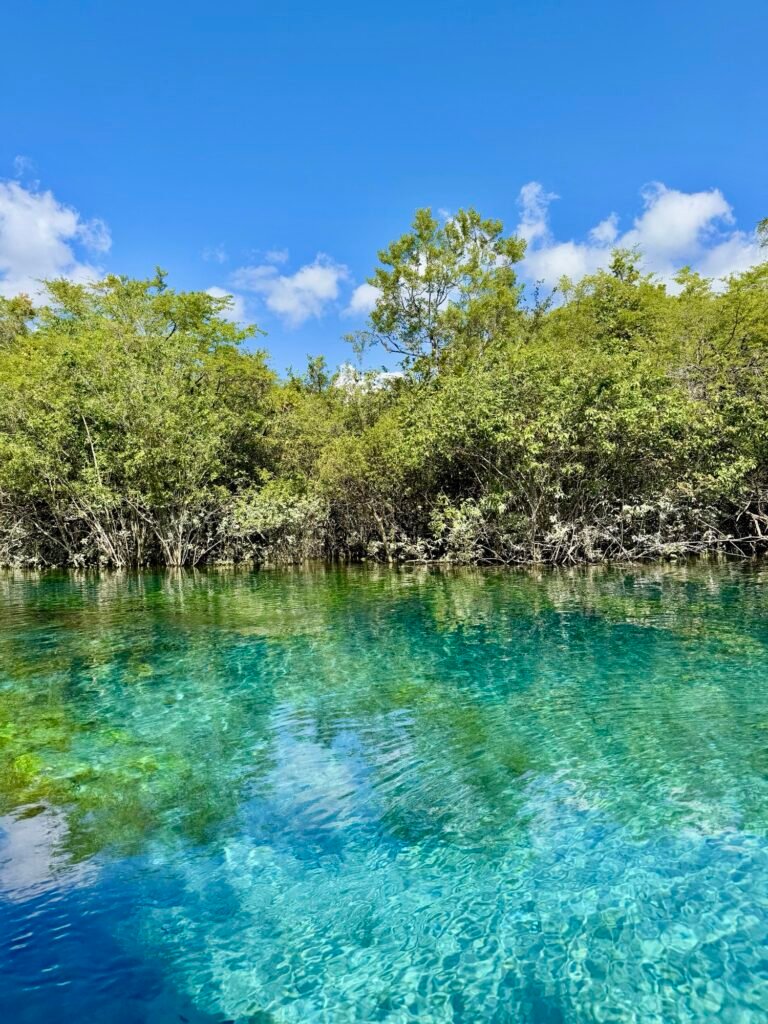
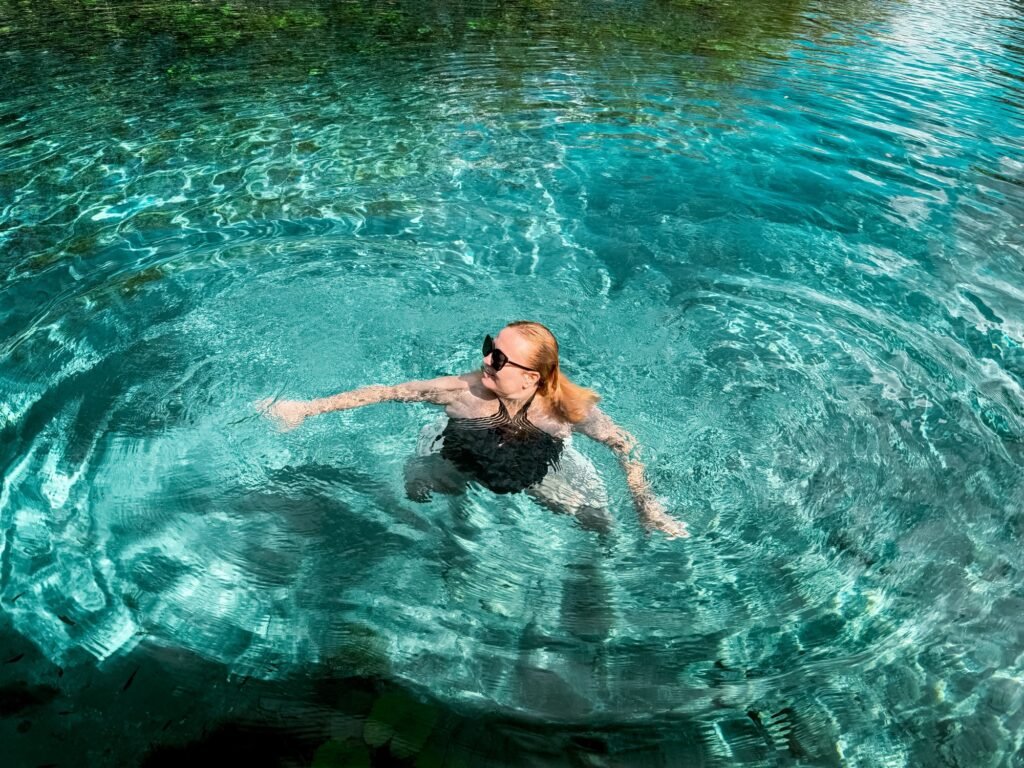
Cráter Azul is a natural spring system associated with the Río La Pasión and Arroyo Pucté, in the municipality of Las Cruces, Petén. The water is remarkably clear, and depending on the season and conditions, it can take on an intense blue or turquoise color. Beneath the surface, aquatic plants create what looks like an underwater garden.
Getting there is part of the experience since Cráter Azul isn’t a roadside attraction. Visitors typically travel by vehicle from Flores toward the Sayaxché area and then continue by boat through the Río La Pasión and Arroyo Pucté.
After reaching the boat launch near Sayaxché/Arroyo Pucté, you’ll travel through the waterways surrounded by dense jungle, wetlands, and wildlife. Depending on your luck, you may see birds, turtles, iguanas, crocodiles, or other wildlife along the river. When we were there, our boat captain was a child, and I want to mention this because I think it’s common in this area. He was a young teenager, and we were shocked, but he was great at his job, and it took approximately one hour to get to the swimming area.
Once you arrive, you can swim, snorkel, photograph the underwater vegetation, and simply relax in the middle of the jungle. The water is so clear that you can see the vegetation beneath the surface, creating an almost surreal effect. If you’re not a strong swimmer, wear a life jacket. Tour operators commonly provide them along with snorkeling equipment
One of the most unusual things about Cráter Azul is the vegetation beneath the water. When conditions are right, the crystal-clear water allows you to see an underwater garden of aquatic plants, which is one of the reasons the destination has become so popular with photographers and people looking for unique places to swim in Guatemala.
If you’re bringing a waterproof camera or GoPro, this is definitely the place to use it (click here to check out the waterproof camera we use). The combination of turquoise water, submerged vegetation, and surrounding jungle makes for some spectacular photographs.
One thing you should know before going is that Cráter Azul is very undeveloped. This isn’t a resort or a swimming attraction with restaurants, bathrooms, changing rooms, and comfortable facilities. There is extremely limited infrastructure, and there are no bathrooms or other visitor services at Cráter Azul.
That lack of development is both part of its charm and something you need to be prepared for. You’re essentially swimming in a beautiful natural spring in the middle of the Petén rainforest. Bring everything you’ll need for the day and, most importantly, take everything you bring back out with you.
What to bring
- 🩱 Swimsuit
- 👕 Change of clothes
- 🧴 Biodegradable sunscreen
- 🦟 Insect repellent
- 🧢 Hat
- 🕶️ Sunglasses
- 💧 Water
- 📸 Waterproof camera or GoPro (click here to check out the camera we have)
- 🤿 Snorkeling equipment if your tour doesn’t provide it
- 🧻 Small towel
- 🗑️ A bag for your trash
- 👟 Comfortable shoes
And don’t forget that there aren’t normal bathroom facilities at the site.
Something to note is that it takes one hour and 40 minutes to arrive from Flores, just over 2 hours from El Remate, almost 3 hours from Tikal, and almost 3 hours from Yaxhá. Most tourists arrive by booking a tour.
Hotels
Most tourists stay in Flores and visit Crater Azul on a day trip.
Restaurants
There are no restaurants on-site. However, there are a few located in the closest town.
🍽️ Restaurante el Jardín de la Abuela: This is an eco-run restaurant serving traditional food, and they have an on-site turtle rescue.
🍽️ Restaurante Carbonero Grill: This is a local spot serving grilled meat.
Tours + Activities
✅ Visit Crater Azul from Flores: This is a small group tour including transportation and a guide. Click here to review the details and to book the experience.
✅ Crater Azul from Flores Private Tour: This tour includes transportation and a guide. I recommend this if you want to arrive early without all the crowds. Click here to review the details and to book the experience.
Luxury/Exclusive Hotels in Petén
The hotels I’ve listed under each destination are all highly rated accommodation options. However, there are two luxury properties located outside of the main tourist areas. If this is your style of travel, then you’ll want to check out the two hotels listed below.
🛌 Bolontiku Boutique Hotel Member of the Cayuga Collection: This is one of the most beautiful, luxurious properties in Petén. The hotel is located right on the lake and 15 minutes by boat from Flores Island. The hotel also has an on-site restaurant and an outdoor pool. Click here to read more and to book a room.
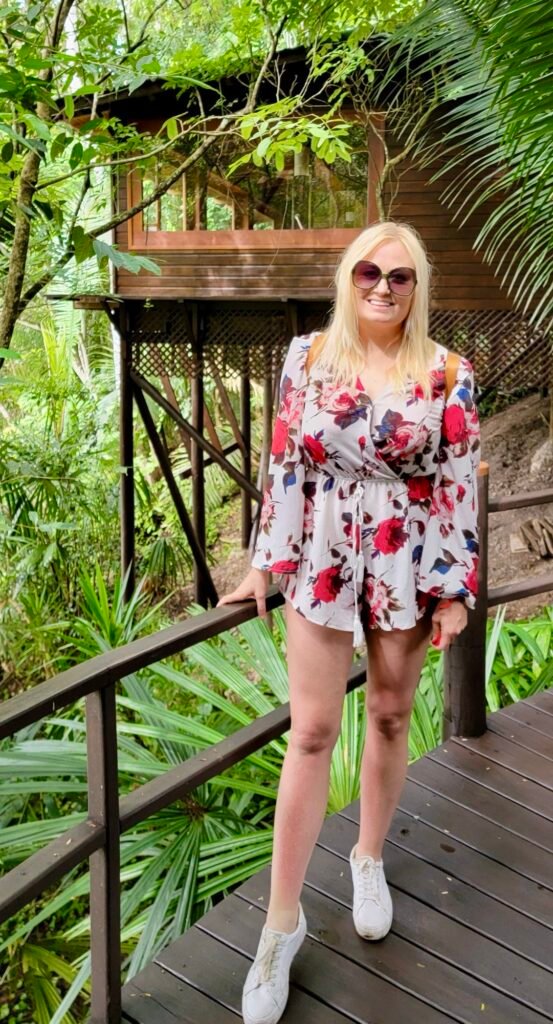
🛌 Las Lagunas Boutique Hotel: We stayed here once and think it might just be the best hotel in Guatemala! It’s located in the jungle, and we saw monkeys during the two days of our stay. There is a beautiful infinity pool overlooking the lagoon. The room we stayed in was a bungalow and sat above the lagoon. The room had a hot tub, and the hotel offered a free boat ride to visit their monkey island. The monkeys roam free on the island, and they came right up to the boat! Click here to read more and to book a room.
2 Responses